How Much Ugaritic Can I Read with Hebrew?
I could read the two-word inscription on an axe. The letter was considerably harder. And the poetry was a case where I probably should have understood more than I did, but apparently I wasn’t prepared for it to rain oil.
That was my latest video, in an ongoing experiment of trying to read ancient The language family that includes Hebrew, Arabic, Aramaic, Phoenician and the Ethiopian languages such as Amharic. using the languages I already know. This time I tried The language of Ugarit on the Syrian coast, written in an alphabetic cuneiform on clay tablets (c. 14th–12th century BCE)..
My background, for anyone coming into this series here, is Hebrew, the A Northwest Semitic language on a sister branch to Hebrew; long contact also shaped Mishnaic Hebrew. Parts of Daniel and most of the Talmud are Aramaic. you pick up from learning The rabbis’ extended discussion of the Mishnah; together the two make up the Talmud. and other Jewish texts, and some conversational Arabic. I can read The Hebrew of Tanach, as distinct from the Mishnaic Hebrew of the rabbis and Modern Hebrew. and The Hebrew of the Mishnah and early rabbinic literature, distinct in vocabulary and grammar from Biblical Hebrew. comfortably. My Arabic is considerably less comfortable, but I can have a conversation with someone who is patient.
A Late Bronze Age trading kingdom on the Syrian coast near Latakia, at the site now called Ras Shamra. was a trading kingdom on the coast of what is now The modern country on the eastern Mediterranean; Ugarit lay on its northern coast., near Syria’s main port; the ruins of Ugarit, at Ras Shamra, lie about ten kilometers to the north.. During the Roughly 1550–1200 BCE: the age of Ugarit and the Hittite and Egyptian empires, ending in widespread collapse. it was under Of the Hittites, the Anatolian empire that dominated northern Syria, Ugarit included, in the Late Bronze Age. domination. Its archives contain letters, administrative records, and literary texts, including the Ugaritic poems about the storm god Baal: his kingship and his battles with Yamm (Sea) and Mot (Death)..1
Ugaritic is a The Semitic branch that includes the Canaanite languages (Hebrew, Phoenician, Moabite), Aramaic and Ugaritic. language, related to Hebrew and Aramaic. Unlike The Canaanite language of Moab, east of the Dead Sea, known mainly from the Mesha Stele (9th century BCE). and The Canaanite language of Tyre, Sidon and Byblos; also the alphabet from which Hebrew, Aramaic and Greek scripts descend., it isn’t usually classified as a The Northwest Semitic branch that includes Hebrew, Phoenician, Moabite, Ammonite and Edomite.. So I expected some familiarity, but not necessarily the experience of reading slightly unusual Hebrew.
One other thing: Ugaritic uses an alphabet written in Writing made of wedge-shaped marks pressed into clay; Ugaritic used it for an alphabet of thirty letters., from left to right. I can make my way through some of the signs, but it doesn’t come naturally to me, and that isn’t really what I’m testing here. For this experiment I mostly read the Ugaritic transcribed into Hebrew letters. The Hebrew and Arabic columns below are transcriptions, not translations.2
The axe
We started with a bronze axe found in the A large house on Ugarit’s acropolis, between the temples of Baal and Dagan, where many tablets and bronze tools were found., catalogued as A Ras Shamra excavation number, identifying a find from Ugarit by dig season and object. / Keilalphabetische Texte aus Ugarit, the standard edition of Ugaritic texts; its numbers group the texts by genre.. It has two words on it:3
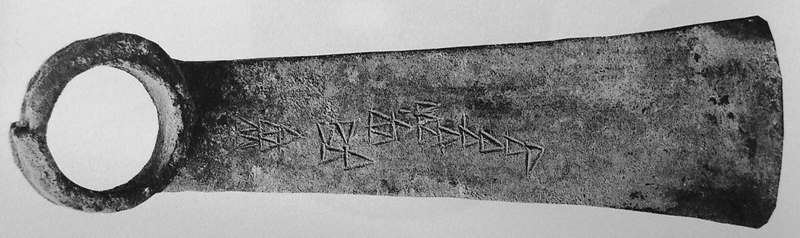
| Ugaritic | Hebrew letters | Arabic letters | Latin letters | Meaning |
|---|---|---|---|---|
| 𐎗𐎁 𐎟 𐎋𐎅𐎐𐎎 | רב כהנמ | رب كهنم | rb khnm | Chief of the priests |
Hebrew רב כהנים, “chief of the priests”; in Ugaritic, rb khnm.. Okay. That one wasn’t particularly difficult.
I wouldn’t necessarily have known what to do with the axe, but I could read the inscription.
A letter to the king
The next text, KTU 2.38, was a letter from the king of A Phoenician port city on the coast of southern Lebanon, one of the great trading cities of antiquity. to the king of Ugarit. I didn’t know what it said before attempting it.
I could identify a king, a brother, some sort of greeting, The great power to Ugarit’s south; in Hebrew מצרים, in Ugaritic mṣrm., and rain. So there were things to work with. Unfortunately, there were also quite a few things I didn’t understand, and I did my best to fill those in. Sometimes rather creatively.
For example, I saw Ugaritic rgm. In Hebrew, the root רגם means to stone., which reminded me of the Hebrew root for stoning. Maybe the king’s name was Rock?
After my experience with The ancient language of Saba (Sheba) and later Ḥimyar in Yemen, written in the South Arabian script., where proper names had caused me trouble, I was apparently prepared to solve this problem by making more things proper names.
It turns out rgm here means “say.” There was no King Rock. That was a contribution of my own.
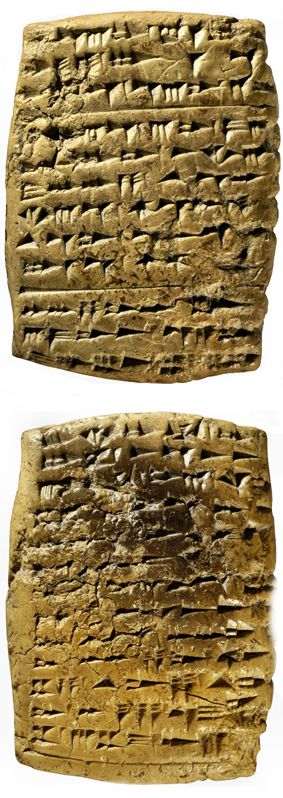
These are a few of the phrases from the letter, rather than a continuous passage:3
| Ugaritic | Hebrew letters | Arabic letters | Latin letters | Meaning |
|---|---|---|---|---|
| 𐎍 𐎟 𐎎𐎍𐎋 𐎟 𐎜𐎂𐎗𐎚 𐎟 𐎀𐎃𐎊 𐎟 𐎗𐎂𐎎 | ל מלכ אגרת אח׳י רגמ | ل ملك أجرت أخي رجم | l mlk ʾugrt ʾaḫy rgm | To the king of Ugarit, my brother, say: |
| 𐎂𐎌𐎎 𐎟 𐎀𐎄𐎗 | גשמ אדר | جشم أدر | gšm ʾadr | Mighty rain / a severe storm |
| 𐎁 𐎟 𐎍𐎁𐎅 𐎟 𐎀𐎍 𐎟 𐎊𐎌𐎚 | ב לבה אל ישת | ب لبه أل يشت | b lbh ʾal yšt | Let him not put it in his heart |
Ugaritic gšm ʾadr. To a Hebrew reader: גשם, rain, and אדר, the month of Adar. looked to me like rain in the month of The Hebrew month that falls around February–March, near the end of the rainy season.. Which seemed reasonable. It rains in Adar.
But it was Hebrew גשם אדיר, “mighty rain.”: mighty rain. Once I saw that the letter concerned ships caught in a storm near Tyre, that made considerably more sense.
I also missed Ugaritic ʾilm, “the gods”; compare Hebrew אלים and אלהים., “the gods.” In retrospect, that was one I should have recognized. And I recognized Ugaritic mṣrm, Egypt; Hebrew מצרים. as Egypt, but without understanding the words around it, I ended up with someone going to Egypt rather than ships being sent there.
The closing reassurance, though, I more or less got: don’t put it in your heart. Don’t worry about it.
So I understood that someone was telling someone else not to worry. I just hadn’t understood what he wasn’t supposed to worry about.
The Baal Cycle
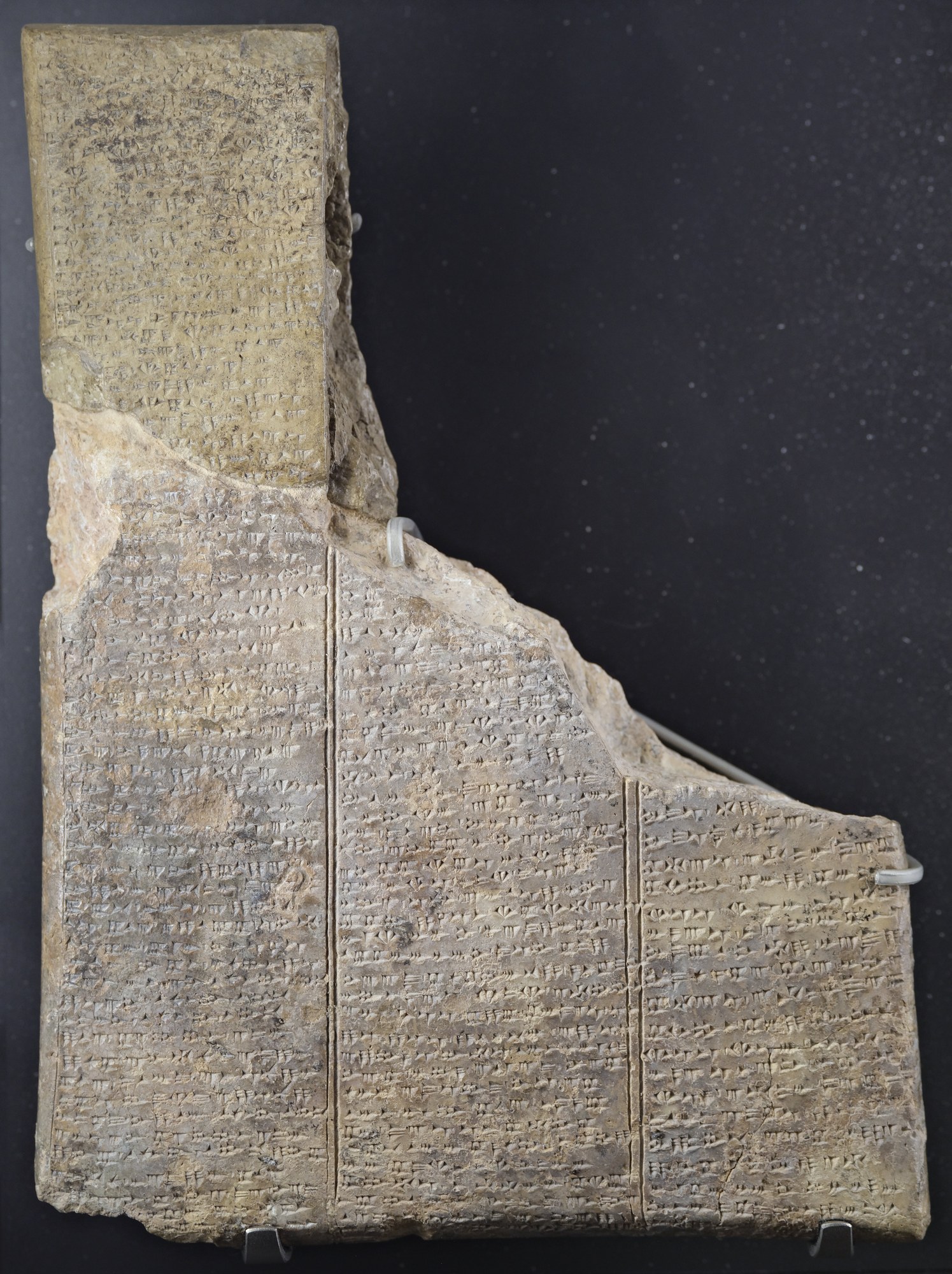
Then I tried two lines from the Baal Cycle:4
| Ugaritic | Hebrew letters | Arabic letters | Latin letters | Meaning |
|---|---|---|---|---|
| 𐎌𐎎𐎎 𐎟 𐎌𐎎𐎐 𐎟 𐎚𐎎𐎉𐎗𐎐 | שממ שמנ תמטרנ | شمم شمن تمطرن | šmm šmn tmṭrn | May the heavens rain oil |
| 𐎐𐎃𐎍𐎎 𐎟 𐎚𐎍𐎋 𐎟 𐎐𐎁𐎚𐎎 | נח׳למ תלכ נבתמ | نخلم تلك نبتم | nḫlm tlk nbtm | May the wadis flow with honey |
I got something about the heavens raining, and something about streams going somewhere. I didn’t know the word for honey. But the oil was sitting right there: Ugaritic šmn, “oil”; Hebrew שמן.. Shemen.
I think the problem was that I wasn’t expecting the heavens to rain oil. So instead of accepting a reading that was fairly close to Hebrew, I assumed I was missing something.
As I said in the video, not all of it is a language issue. Sometimes it’s just a skill issue.
In this case, the sentence actually made the individual words harder for me to recognize. Usually context helps. Here I might have done better if someone had handed me each word separately, because I wouldn’t have been trying to make the weather report sensible.
How close did it feel?
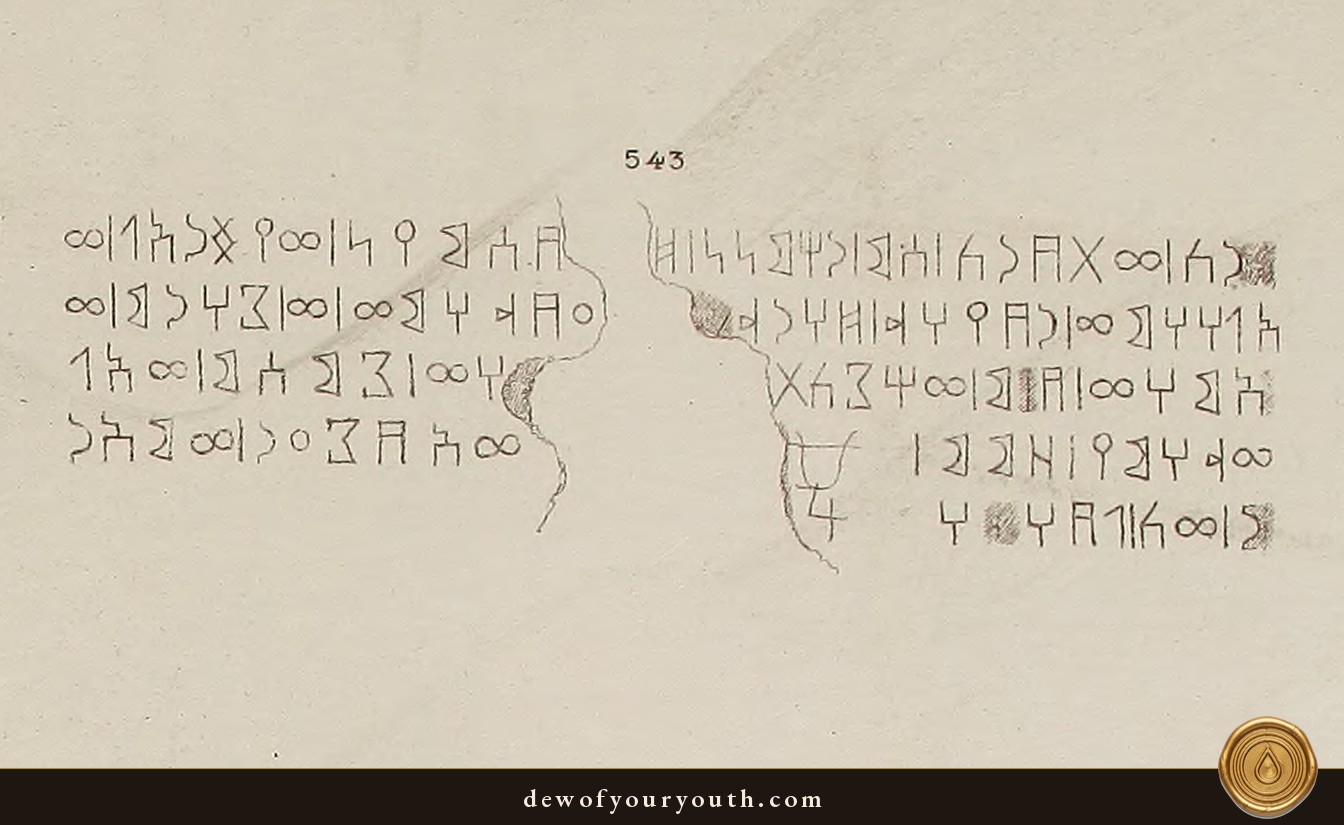
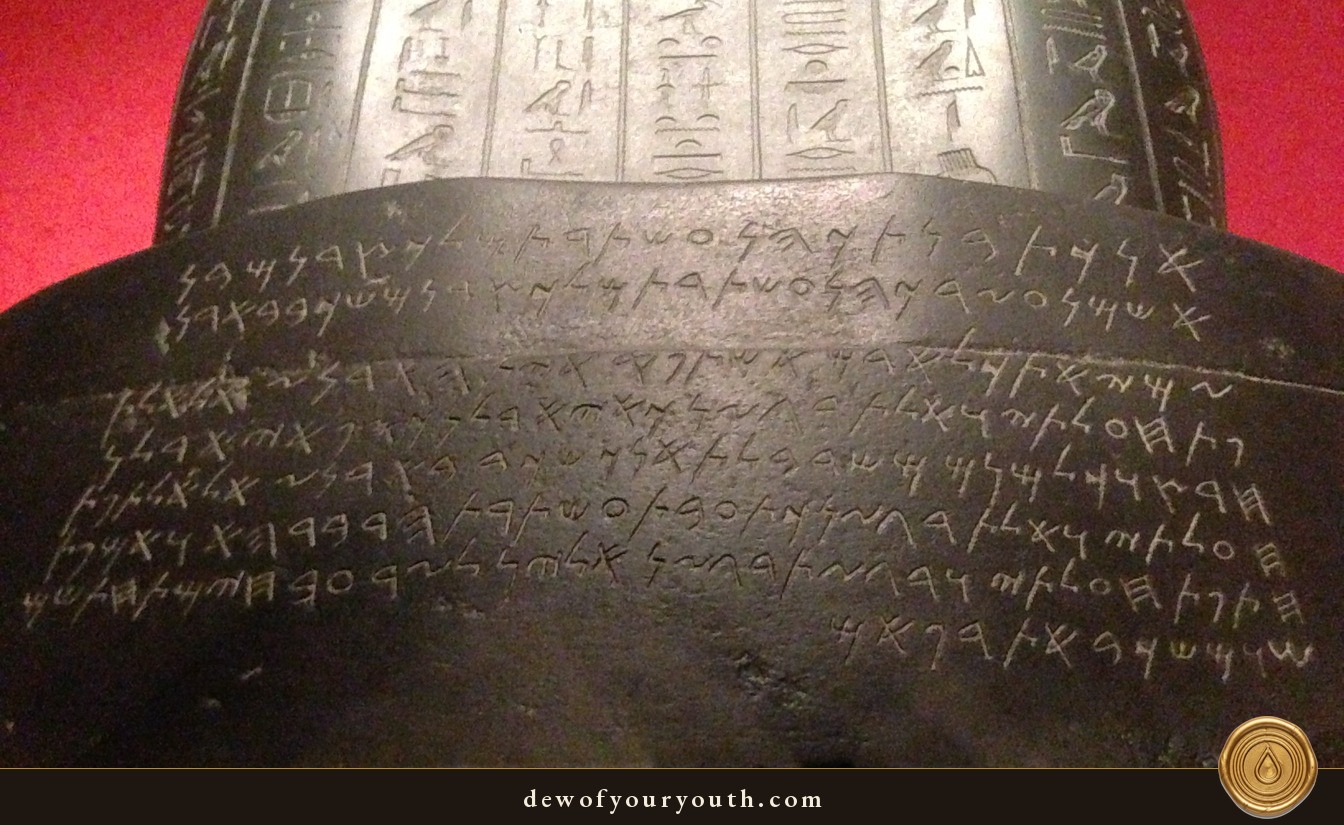
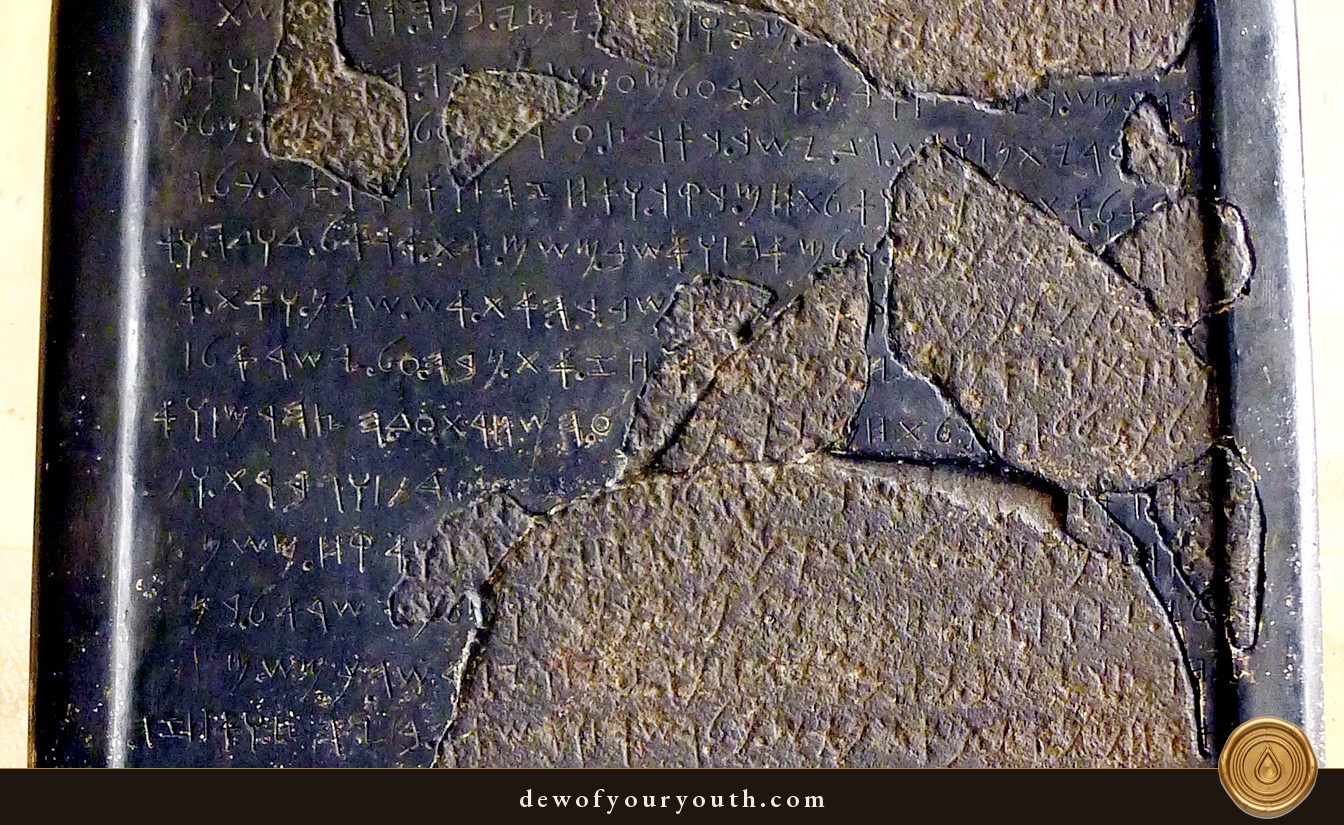
I couldn’t read Ugaritic straight through with anything like the ease of reading a passage from the The Five Books of Moses; more broadly, the whole body of Jewish teaching.. Moabite and Phoenician had felt much closer to that. With Ugaritic, I kept recognizing words and then losing the sentence.
But once I looked at the translations, a lot of it felt accessible. Some words were simply unfamiliar. I didn’t know the word for honey, and staring at it longer wasn’t going to help. Others I knew perfectly well. שמנ is shemen. I didn’t miss it because it was foreign. I missed it because heavens raining oil didn’t sound like something a sentence would say, so I went looking for a reading that made more sense. Those aren’t the same problem, even if they look the same on camera.
With Sabaic, I often felt that I simply didn’t have enough to go on. Here I felt that knowing a few more words would have made a substantial difference. I wouldn’t claim that I understood the letter, because I didn’t. But I could see how I might get there.
And the Baal passage was closer than my first attempt suggested. Apparently I needed to be a little more open-minded about what could fall out of the sky.
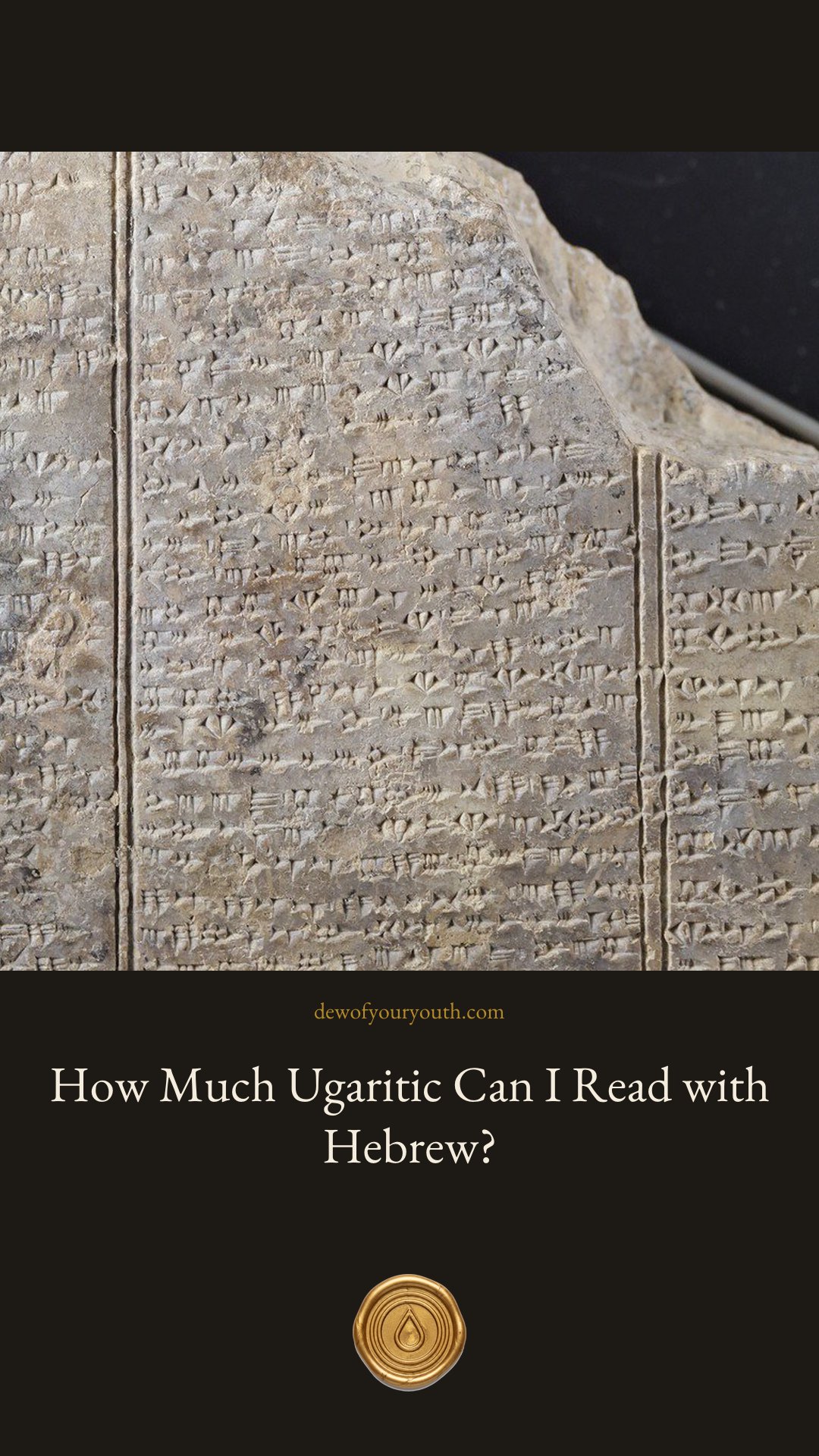
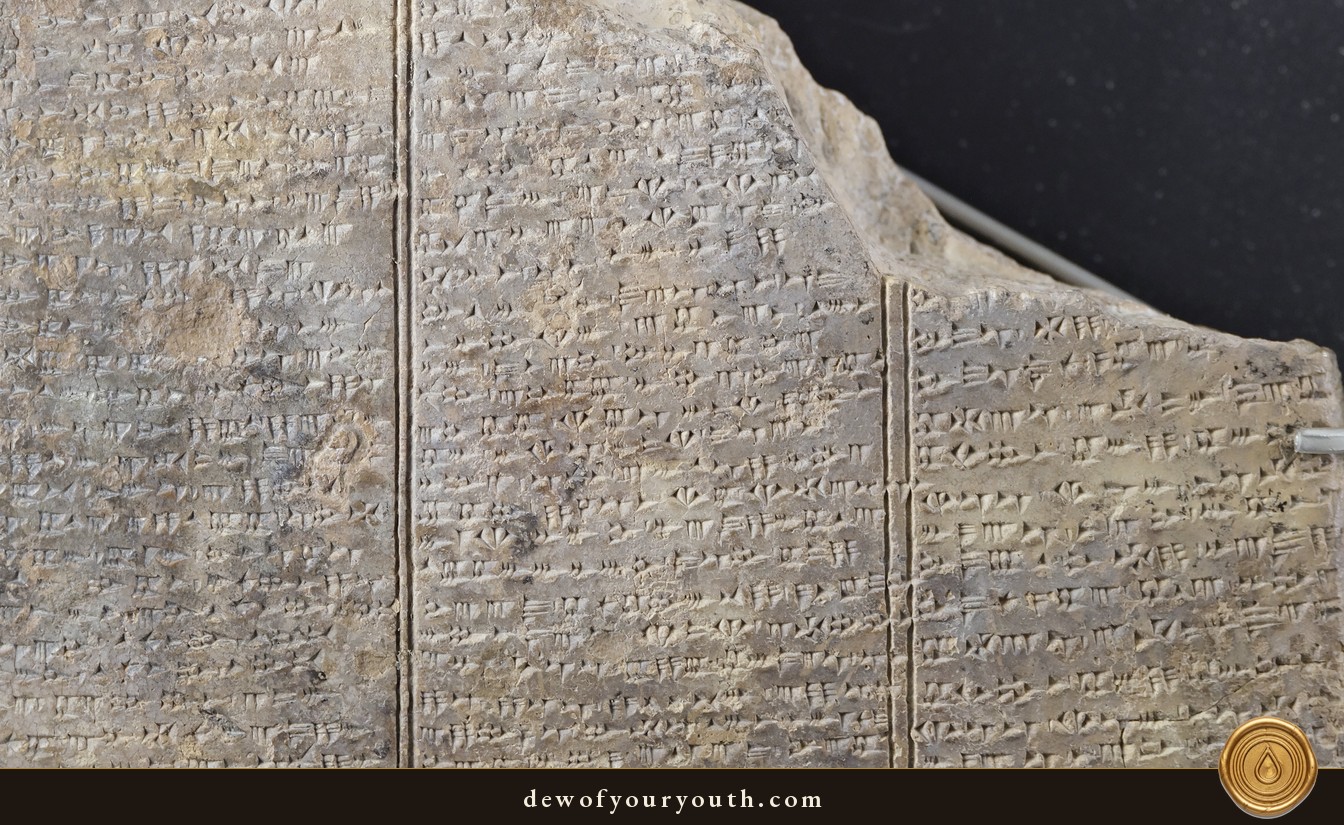
Featured image: detail of the Baal Cycle tablet KTU 1.6 (Louvre AO 16636), photo by Shonagon, cropped, CC0, via Wikimedia Commons.
Scuola Normale Superiore, Mnamon: Ugaritic language and writing system. The added marks in the teaching transcription preserve consonant distinctions that ordinary Hebrew spelling would obscure. ↩︎
Scuola Normale Superiore, Mnamon, Ugaritic writing examples, including RS 1.051 and RS 18.031. Some details of the letter’s maritime vocabulary are disputed; the table gives selected phrases only. Its diplomatic use of “brother” need not mean a biological brother. ↩︎ ↩︎
KTU 1.6 III 6–7; Clemens Steinberger, Glossar der ugaritischen poetischen Formen, Göttingen EUPT. The Latin column gives consonants, rather than a fully reconstructed pronunciation. ↩︎