Sam Shore's 82 Yahrzeit: A Tale of a Spear and Emigration
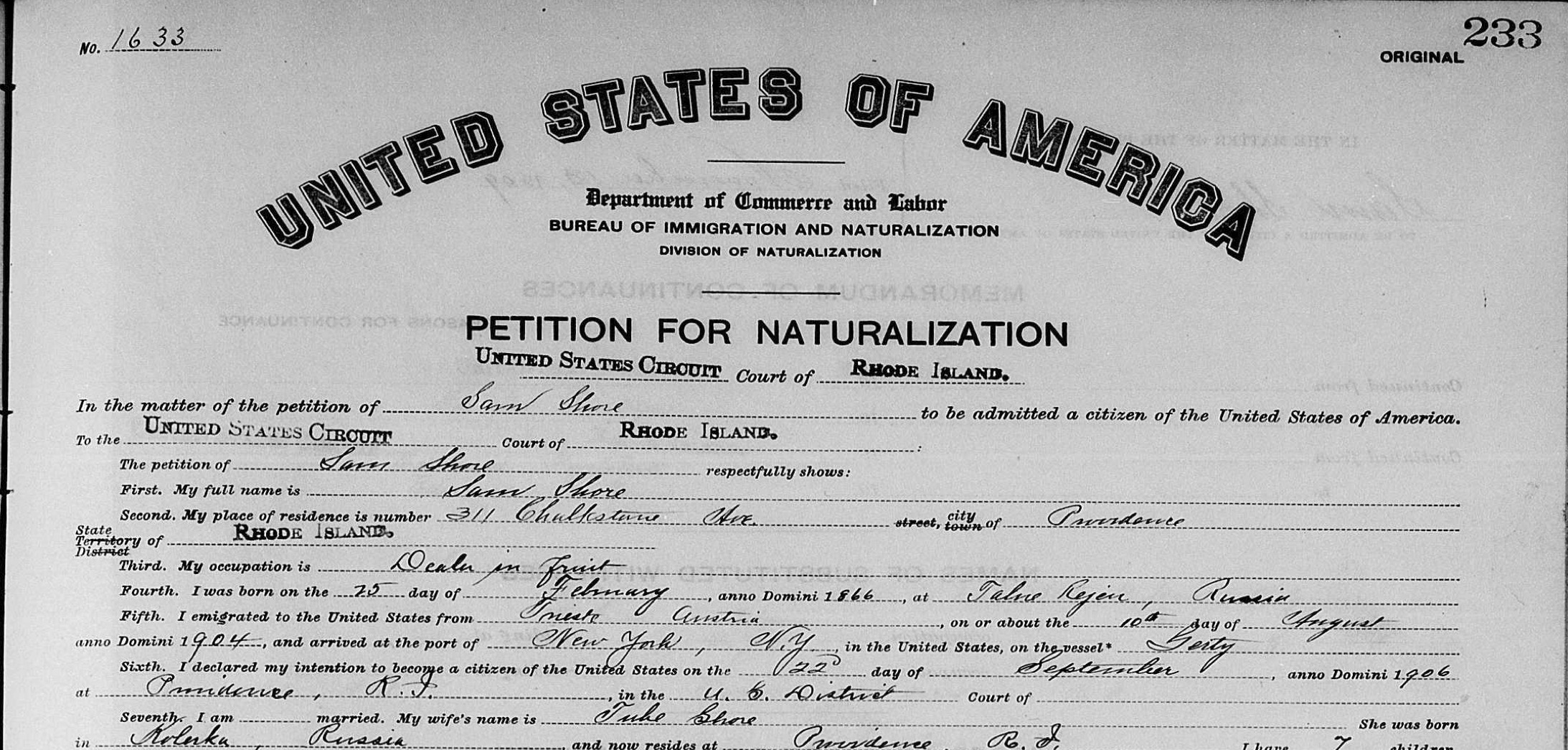
Tonight, the 7th of Iyar, is the 82nd yahrtzeit of Shmariahu (Sam) Shore — my great-great grandfather, born in Talne, Ukraine in 1868, died in Providence, Rhode Island on April 30, 1944. May his neshama have an aliyah.
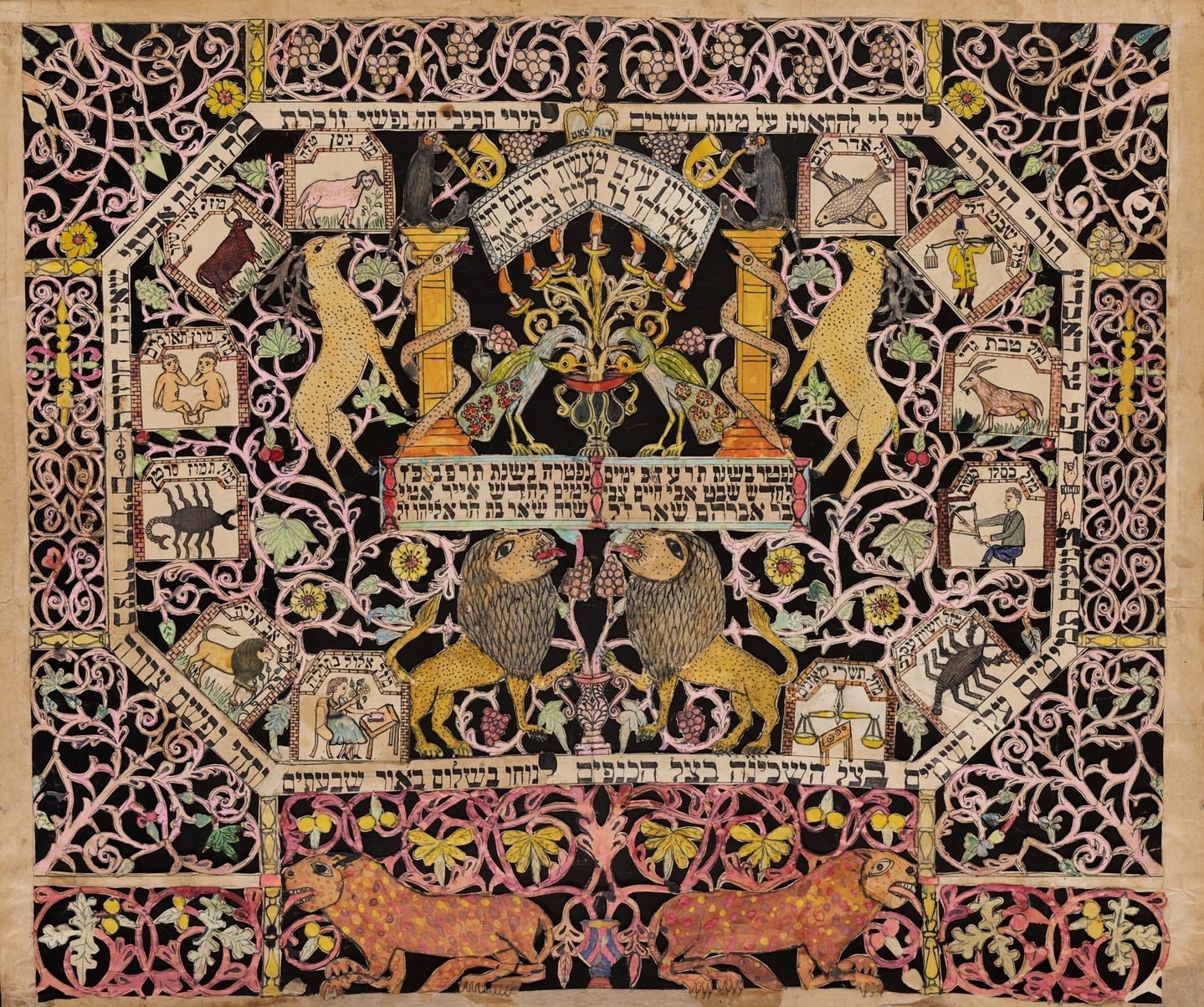
Two years ago, I wrote a fuller account of his life for his 80th yahrtzeit — his role as the first president of Sons of Jacob Synagogue, his founding of the Hebrew Free Loan Society and the Hebrew Free Sheltering Center in Providence, his frescoes and paper cuttings, and the tall tales (some more plausible than others) that followed him through family memory. For a fuller picture of who he was, I’d point you there first.
This year I want to add something new. Earlier today, right before his yahrtzeit — I received a story I hadn’t heard before.
Deane Berson relates a conversation that took place between Shmaria and his father, Chaim Tzvi (Hyman Shore), on the subject of emigrating to America. Chaim Tzvi apparently had misgivings. At some point he asked his son directly: why are you so keen on going to the United States?
Shmaria walked to the closet where the family kept their schpeze — a spear used for self- defense — and said:
“In America, we won’t need this.”
A quick aside
Enjoying this post?
Come along on WhatsApp or Telegram — new posts, reflections, and the occasional spiral.
I find this story striking for a few reasons.
The first is what it tells us about the conditions of Jewish life in the Pale of Settlement at the turn of the century. A spear kept in a closet for self-defense is not a metaphor. Talne, in the Cherkassy region of Ukraine, was not a peaceful place for Jews in the 1890s and early 1900s. Between 1903 and 1906 alone, approximately 660 pogroms were recorded across Ukraine and Bessarabia. The first major Kishinev pogrom was in 1903; the family sailed on the S.S. Gerty in 1904. The schpeze was a practical object — and not an unusual one.
The word itself is almost certainly Yiddish, likely derived from the German Spieß, meaning spear or pike. And spear-like weapons were a documented feature of Jewish self-defense in this exact region and period. In Yekaterinoslav — in the Dnieper region, not far from Talne — Jewish self-defense groups in the years between 1903 and 1905 had smithies fashion iron poles with spikes specifically for pogrom defense. A memoir from a Jewish farming colony in Ukraine from roughly the same era describes improvised weapons made from iron in the smithy: long-bladed pointed implements that the author noted were “difficult to define — it was unclear whether it was a knife or a spear.” The schpeze in the Saranduk family closet was not an eccentric artifact. It was what people kept — a direct consequence of the 660 pogroms recorded across Ukraine and Bessarabia between 1903 and 1906 alone.
The second is what it tells us about Shmaria. The notes I’ve collected describe a man who was forceful, intimidating, not easily cowed — someone who reportedly punched a horse (it did not go well for the horse). This is not a man who would have kept the schpeze out of cowardice. He kept it because the situation called for it. And he left because he believed they could build a life where it didn’t.
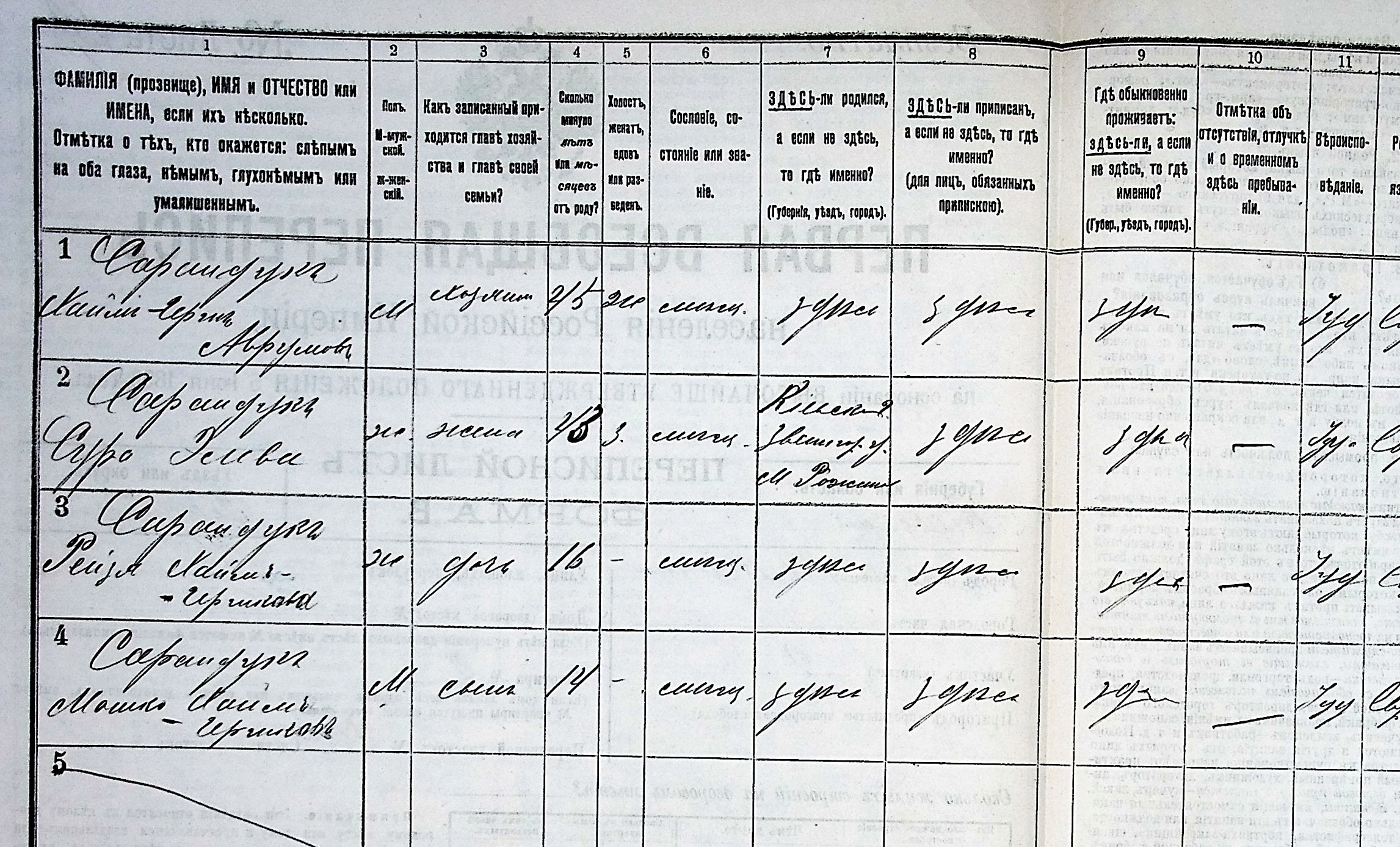
The third is the quiet drama of the argument itself — and the fact that it worked. Chaim Tzvi had real misgivings. Shmaria’s answer wasn’t a speech. He just went to the closet. We know how it ended: the S.S. Gerty manifest from September 1904 lists Chaim Hersch Saranduk, age 55, sailing alongside his son Schmarje and three generations of family, bound for America. His father got on the boat. The schpeze apparently stayed behind.
What we know from the documents is consistent with it: Shmaria was the one who organized the emigration, who led three generations of Saranduks onto the S.S. Gerty, and who built the institutional infrastructure of Jewish Providence almost immediately upon arrival. The man in this story — the one who walked to the closet instead of arguing — looks a lot like the man in the records.
Yehi zichro baruch. May his memory be a blessing.
For the full account of Shmariahu Shore’s life, see The 80th Yahrtzeit of Shmariahu Shore.
For broader context on the Saranduk / Shore family, see The Saranduk / Shore Family: An Overview.