Returning to the Test: Tzidkat HaTzaddik 72–73
My father and I learned paragraphs 72–73 of Tzidkat HaTzaddik (“The Righteousness of the Righteous”): Rav Tzadok’s book of short numbered teachings on spiritual life.. We started with miracles. Rabbi Tzadok HaKohen of Lublin (1823–1900), Hasidic thinker and author of Tzidkat HaTzadik. says:
אפשר לעשות מופתים על־פי התורה.
You can work miracles through Torah.1
That was how “Moshe our teacher”: Moses, through whom the Torah was given. did his miracles. He opened a new gate in the words of Torah, and through the light of those words there was an influx of light into the world to do whatever it was he was doing.
You can also work miracles through prayer.
Why write down the miracles?
If you notice, for most of the prophets, we do not get a whole account of their miracles. Then suddenly you get to The prophet Elijah, who challenged the prophets of Baal on Mount Carmel and was taken up to heaven in a whirlwind (1 Kings 17–2 Kings 2). and The prophet Elisha, Eliyahu’s disciple and successor (1 Kings 19–2 Kings 13)., and there are tons of them.
The Sages tell us:
נבואה שהוצרכה לדורות נכתבה, ושלא הוצרכה לא נכתבה.
Prophecy needed for future generations was written down; what was not needed was not written down.
There were lots of prophets and lots of things they said. God telling you something does not necessarily mean He wants you to write it down. He might want you to deliver the message, understand it, whatever. So if these stories were written down, they must be needed “For the generations”: for all future generations.. Even though the miracles themselves were only for that time, Rav Tzadok says they opened gates.
My father asked whether I meant prophecy in general.
The Torah of Moshe is still around. We understand why we need it. Otherwise, how would we know what to do? It is the basis of all of Judaism. But these miracles happened, did whatever they needed to do, and are no longer happening. Why do we need all these accounts of them?
Eliyahu and Elisha
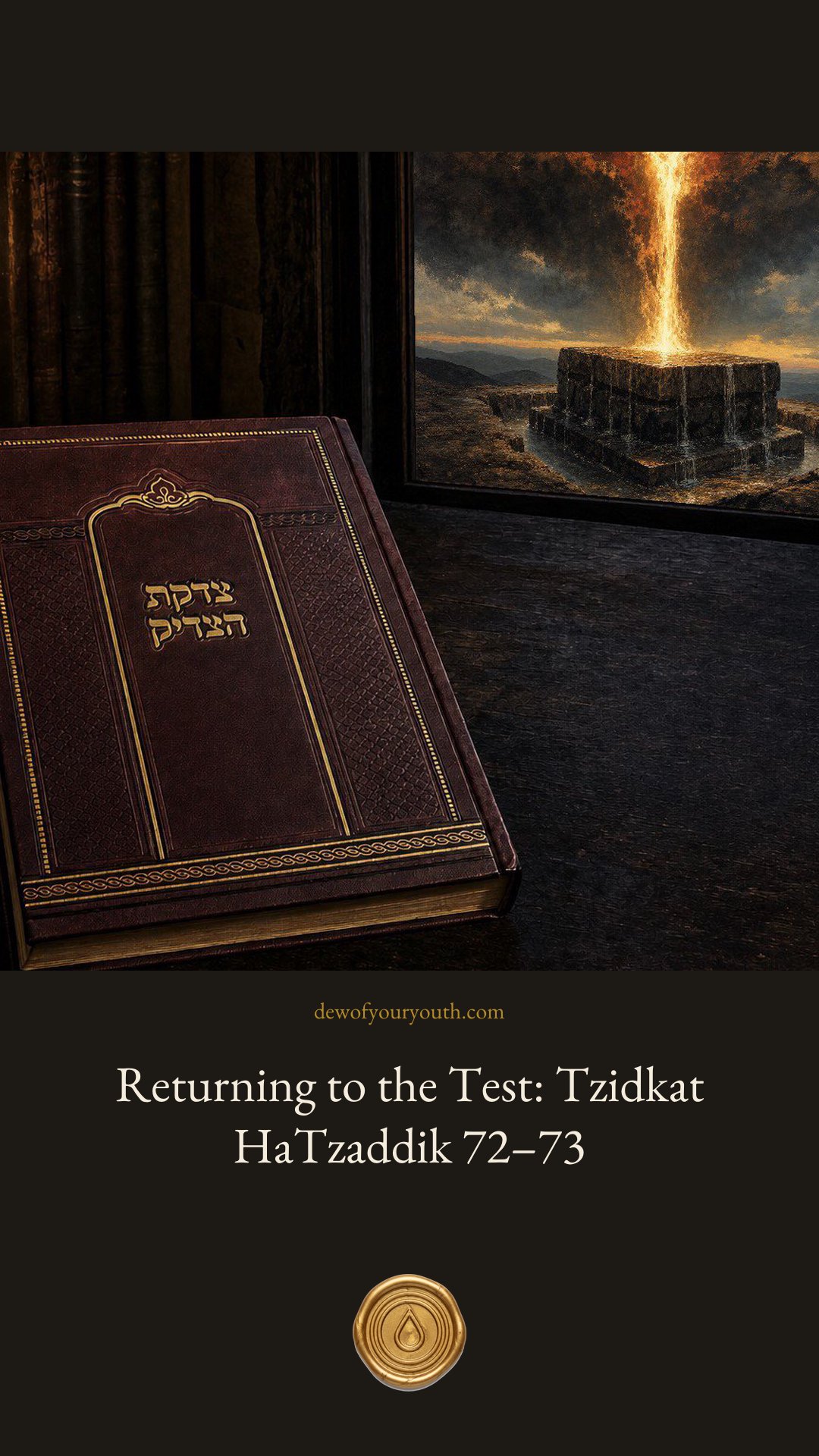
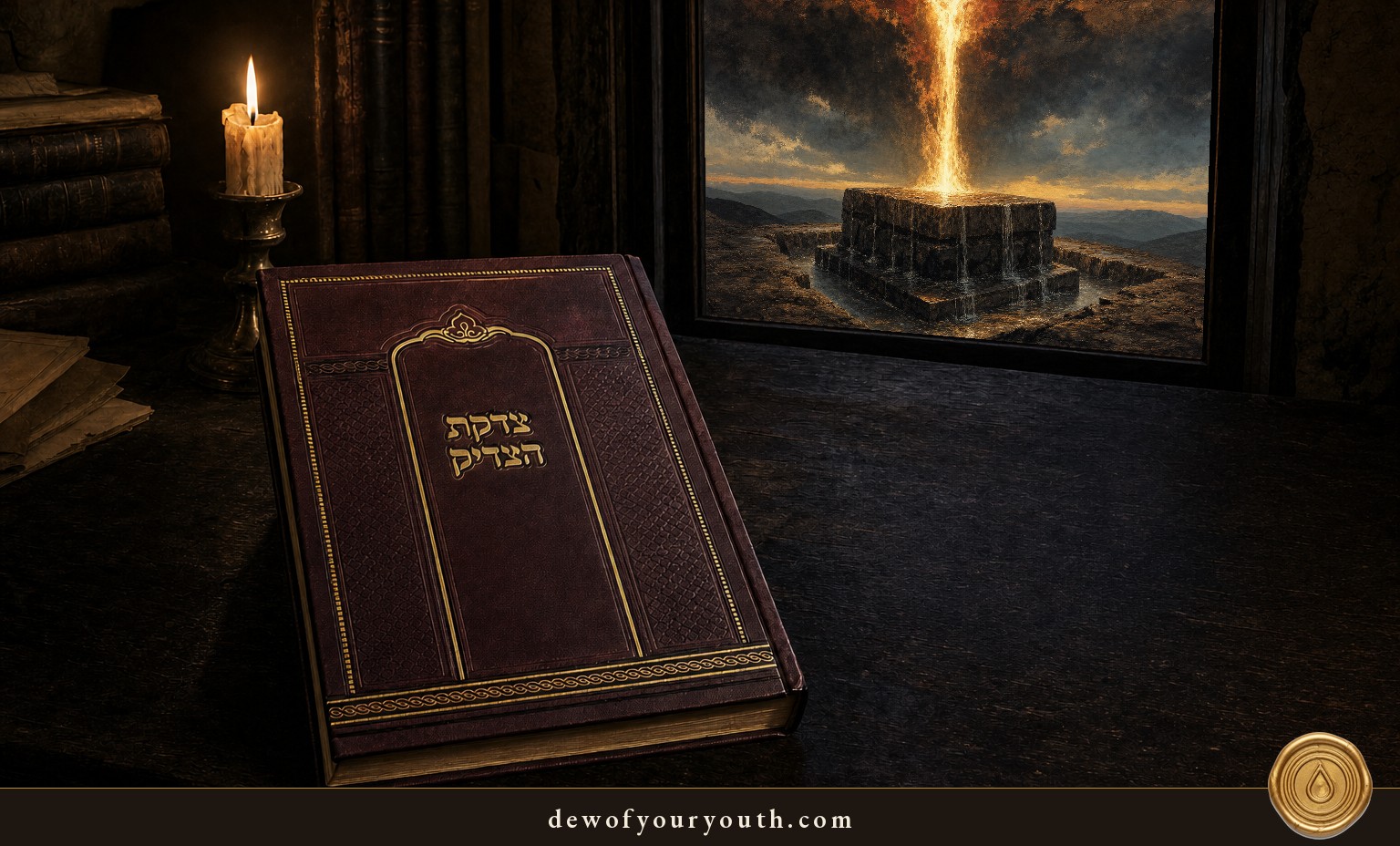
All of Eliyahu’s miracles were through Torah. Rav Tzadok gives the example of the fire coming down on Mount Carmel: it came through a A novel insight or ruling in Torah (pl. chiddushim). permitting the In Tanach, a high place of worship; in rabbinic usage, an altar outside the Temple (pl. bamos)., the altar outside the Temple.
This is the famous contest between Eliyahu and the prophets of Baal. You can do whatever you want, but you cannot light the fire yourself. Baal did not manage to get anything going. Eliyahu had them soak the altar with water. Why not? Soak the whole thing. Then the fire came down and everything caught fire.2
So how was he able to do that? Rav Tzadok says he had a chiddush in Torah that allowed him to make this altar outside the Temple. Through that chiddush, he was able to work miracles.
The altar needed permission because the Temple was standing. Once the Temple was built, offering on a bamah anywhere else was forbidden. The The rabbis’ extended discussion of the Mishnah; together the two make up the Talmud. treats Carmel as a one-time ruling for the emergency, on the authority of a prophet.3 A lot of what Eliyahu did looks like that: strange things done on the authority of prophecy. Rav Tzadok does not call it a prophetic suspension of the law, though. He calls it a chiddush in Torah. The miracle came out of the Torah, not around it.
Elisha’s miracles were through prayer. Obviously, Eliyahu also prayed. But the miracles of Eliyahu came through a chiddush in Torah, opening a gate through which the light came. Rav Tzadok brings the Gemara’s phrase for him: ואלישע דעביד ברחמי, Elisha, who worked through supplication.
And Elisha merited a double portion, twice as much as Eliyahu, even though he was Eliyahu’s student:4
כי יותר יש לפעול על־ידי תפלה. אבל מכל מקום מה שעל־פי תורה גדול.
More can be accomplished through prayer. Nevertheless, what comes through Torah is greater.
You can do more through prayer, but Torah is on a higher level.
He brings the Gemara in The tractate of the Talmud on the laws of the Sabbath.:
מניחים חיי עולם ועוסקים בחיי שעה.
They leave eternal life and occupy themselves with the life of the moment.
I explained it as the complaint about spending too long praying when you could be learning.5 Usually, when you pray, you are praying for things. Even the most lofty prayers are for the redemption, for The Messiah: the anointed king from the house of David who will bring the redemption. to come. Torah is eternal. So even though you can accomplish more through prayer, Torah is greater.
והמעמיק יבין
We spent a while trying to work out what Rav Tzadok was building toward with his two kinds of miracles, and why the stories are needed לדורות. We didn’t really come up with anything, and as far as I can find, he never comes back to it later in the book.6
Then we noticed how he ends the paragraph: “One who goes deep will understand”: a signal that more lies beneath the stated point., “one who goes deep will understand.”
Clearly, we are not המעמיק.
Same woman, same desire
Then we went on to Paragraph 73.:
כשהאדם מתקן מה שחטא, אז ה׳ יתברך מזמין לו אותו פרק ואותו מקום, כדי שתהיה תשובת המשקל.
When a person repairs the sin he committed, Literally “the Name”: a reverent way of referring to God. brings him to the same time and place, so that there will be “Weighed repentance”: repentance proportioned to the sin it repairs..7
I brought the Rabbi Moshe ben Maimon (Maimonides, 1138–1204), author of the legal code Mishneh Torah.’s description of complete repentance. You have the same opportunity, with the same woman and the same desire, and you hold back. You don’t do it. That is complete Repentance; literally “return.”.8
Obviously, you are not allowed to seek this out yourself. If you did something wrong with a woman, you cannot decide that, in order to do teshuva, you are going to put yourself back in the exact situation where you screwed up.
What could possibly go wrong?
Rav Tzadok points out that you would already be violating the The prohibition on a man and a woman not married to each other being secluded together.. Even if you succeed in resisting the sin, you have already done something forbidden by arranging to be alone with her.
Hashem will bring you the opportunity. He says זה או ענין כיוצא בו, this or something similar. If that woman was hit by a bus, there could be another woman you find similarly attractive. You don’t have to take life insurance out on any woman you’ve had an affair with.
You can if you want. I’m not telling you what to do.
Anyway.
Hashem will not bring you this test unless He knows you will not fail again. So if He brings you back into the situation where you failed, it is a sign that you have been repaired and your teshuva was accepted.
A lost object in Paris
Rav Tzadok brings the Gemara in The tractate of the Talmud on courts, capital cases and punishments. about a butcher caught selling nonkosher meat.
Now he wants to do teshuva. Of course he is not selling Not kosher; literally “torn,” of an animal unfit to eat. anymore. People already suspect him; the jig is up. That could just be self-preservation. So the Gemara says he has to go somewhere nobody knows him and prove himself there: return a valuable lost object, or throw out valuable treif meat of his own at a loss.9
The second option will come to him in the ordinary course of things. He is a butcher; sooner or later an expensive animal of his will turn out to be treif, and he can declare it so and take the loss. Rav Tzadok’s question is only about the first. You cannot decide where you will find a lost object. You find it where you find it.
והרי זה אין בידם אם אין מוצאין אבידה מה יעשו.
This is not in their hands. If they do not find a lost object, what are they supposed to do?
What, now he can’t do teshuva?
If you were just at home, fine, people find lost objects. But you have to go off to Paris and find one there? Who says you are going to find a lost object in Paris? Come on.
Rav Tzadok says that if your teshuva is complete, Hashem will arrange it. You will find the lost object in Paris. Don’t worry about it.
Don’t pick it up, though. It could be a bomb.
“Exactly,” my father said.
Gechazi
Elisha’s servant, who was struck with leprosy for taking Naaman’s gift (2 Kings 5). was Elisha’s student who was not so kosher. Rav Tzadok says his sin was שחמד למה שאינו שלו: he wanted what wasn’t his. I brought up his conduct toward the The woman of Shunem who hosted Elisha and whose son he brought back to life (2 Kings 4).. More generally, he wanted other people’s things. Money, women. You shall not covet.10
Hashem brought him the beginning of his repair through the spoils of The Aramean kingdom centered on Damascus, Israel’s northern rival.. The Sages identify the lepers in that story as Gechazi and his sons. They did help themselves to some of it. But they could have kept quiet and taken more, and instead they went to tell the others. They were afraid of sin: ומצאנו עוון, “punishment will overtake us.” The man whose sin was coveting stood in front of an abandoned camp full of loot, and this time he didn’t keep it to himself. Rav Tzadok calls that the beginning; Gechazi’s name is not yet mentioned explicitly.
Then comes the story of the woman getting her property back through him. Gechazi did not arrange it; it came about through him on its own. That is the same principle as before. You don’t go looking for the test. It finds you. Rav Tzadok says it is a sign of the completion of his repair. She got her things back through him, instead of his wanting to keep them for himself.
Afterward, Elisha went to Aram. The Sages say he went to bring Gechazi back to repentance. Elisha had kicked him out; now he went to bring him back.
Rav Tzadok connects this with the The first written code of the Oral Torah, edited around 200 CE by Rabbi Yehudah HaNasi. in The tractate of the Mishnah describing the layout and measurements of the Temple., where people say to someone who has been placed under a ban:
השוכן בבית הזה יתן בלבם ויקרבוך.
May the One who dwells in this House put it in their hearts to bring you near.
Even after all this repair, Gechazi still needed to be brought close to Elisha. And he merited that the person who had pushed him away was himself the one who brought him close again.
But the Sages list Gechazi among the people who have no share in the World to Come. They also say that he did not want to come back. Rav Tzadok says that, nevertheless, “Expounders of hints”: sages who read hidden allusions in the verses. said he does have a share.
“What does he mean by that?” my father asked. “Just the literal meaning of what you just said.”
There is a contradiction about whether Gechazi gets the World to Come. In one place, he is explicitly on the list of people who do not. But there is also the reading we had last time, finding hints in Psalms that various people do have a share. Gechazi is one of them.
So explicitly, Gechazi does not get the World to Come. In this hidden way, through that reading, he does. I am not a hundred percent sure what that means. Presumably, in Rav Tzadok’s world, there is some revealed way in which he doesn’t and some hidden way in which he does. And if we are going Rav Tzadok all the way, the hidden way is higher than the revealed way, and so on.
Take two
My father thought this returned to what we had been learning: teshuva on teshuva, descent before ascent, and the thing that made something nonkosher being the means by which you Making a utensil fit for kosher use by purging what it absorbed, usually with heat. it.
Yes. We said last time that your weakness is your greatness. Now he brings תשובת המשקל: where you failed is where you have your repair. You have to be in the situation of the failure to repair it. Once my father pointed that out, it seemed clear. He was right.
And Rav Tzadok stretches the term to get there. תשובת המשקל usually means penance weighed against the sin: suffering in proportion to the pleasure you took, so the scales balance.11 Rav Tzadok moves the weight. What balances the sin is not a matching amount of pain but the matching situation: the same woman, the same time, the same place, and this time you walk away.
I wanted to add something I probably should have said earlier. Usually, when people read that Rambam, they do not take it to mean that this has to happen. If you have the same opportunity and refrain, that is complete teshuva. You failed; take two, you did it right. But you do not necessarily read it as a promise that you will get take two.
There is also the Rambam’s language about the One who knows what is hidden testifying that you will not return to the sin. Rav Tzadok says that when Hashem knows you will not fail, He gives you the opportunity to show it.8
I was not entirely sure whether he meant that it has to happen. But he is saying that when it does happen, it is a sign that your teshuva is complete.
Why does Hashem need to do that? Maybe it is for you. After the sin, perhaps you need to realize that you are not the man you used to be. Or something like that.
By the time the test comes, the change has already happened. Hashem knows you would not do it again. He says here that Hashem is not going to give you the test unless He knows you will not fail.
You can go and seek out the test yourself. If you want to do it, you’ll find a way. But if you are not looking for it, Hashem brings it to you to show you. That’s how He shows you that you did complete teshuva.
Tzidkat HaTzaddik 72, citing Megillah 14a and 27a, and Shabbat 10a. ↩︎
I Kings 18:20–39. Rav Tzadok’s explanation of the fire through the permission for the במה is in paragraph 72. ↩︎
Yevamot 90b, where Eliyahu on Carmel is the example of a prophet who may temporarily set aside a Torah law. ↩︎
II Kings 2:9, ויהי נא פי שנים ברוחך אלי, Elisha’s request for a double portion of Eliyahu’s spirit. The Gemara Rav Tzadok cites for Elisha’s prayer is Megillah 27a. ↩︎
Shabbat 10a: Rava saw Rav Hamnuna drawing out his prayer and said this about him. ↩︎
Paragraphs 182 and 212 put Torah and prayer side by side, but neither returns to the two kinds of miracles. Rav Eliezer Melamed quotes paragraph 72 in Peninei Halakha and reads “Torah is greater” to mean that miracles through Torah have a deeper and longer-lasting effect, because Torah is חיי עולם. ↩︎
Tzidkat HaTzaddik 73, citing Sanhedrin 25a, 107b and 104b, and Middot 2:2. ↩︎
Sanhedrin 25a, the ruling of Rav Idi bar Avin. ↩︎
II Kings 4:27 and Berakhot 10b for the Shunammite woman; II Kings 7–8 for the camp of Aram and the restoration of her property. The account of Gechazi’s repair follows paragraph 73; the lepers’ fear of sin is II Kings 7:9. Last time, Sotah 47a counted Elisha’s pushing Gechazi away among the causes of his illness. Here, the one who pushed him away is the one who goes to bring him back. ↩︎
This is the sense in the Rokeach’s laws of repentance, which list תשובת המשקל among the kinds of repentance, and in later works that follow him. ↩︎