Old Aramaic: A King, a Curse, and Some Familiar Territory
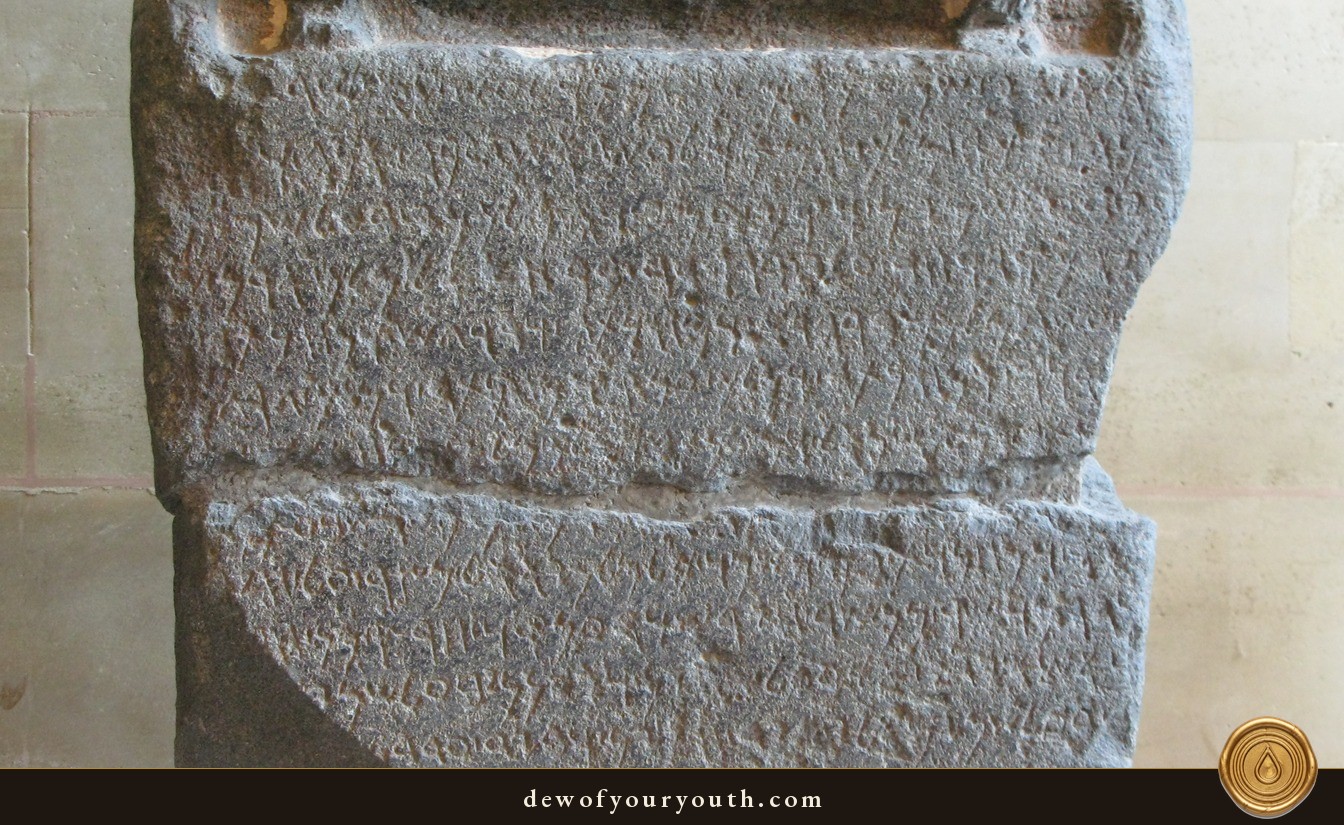
For the first reading experiment in the Aramaic series, I tried two passages from ancient Syrian inscriptions: the A basalt stele of about 800 BCE in which Zakkur, king of Hamath and Luash, credits his god with saving him from a siege; now in the Louvre. and the Three eighth-century BCE steles from Sefire, near Aleppo, recording treaties between Bar-Gaʾyah of KTK and Matiʿel of Arpad.. I’ve already written about my background with Aramaic and the plan for this series, so we can get straight to the reading.
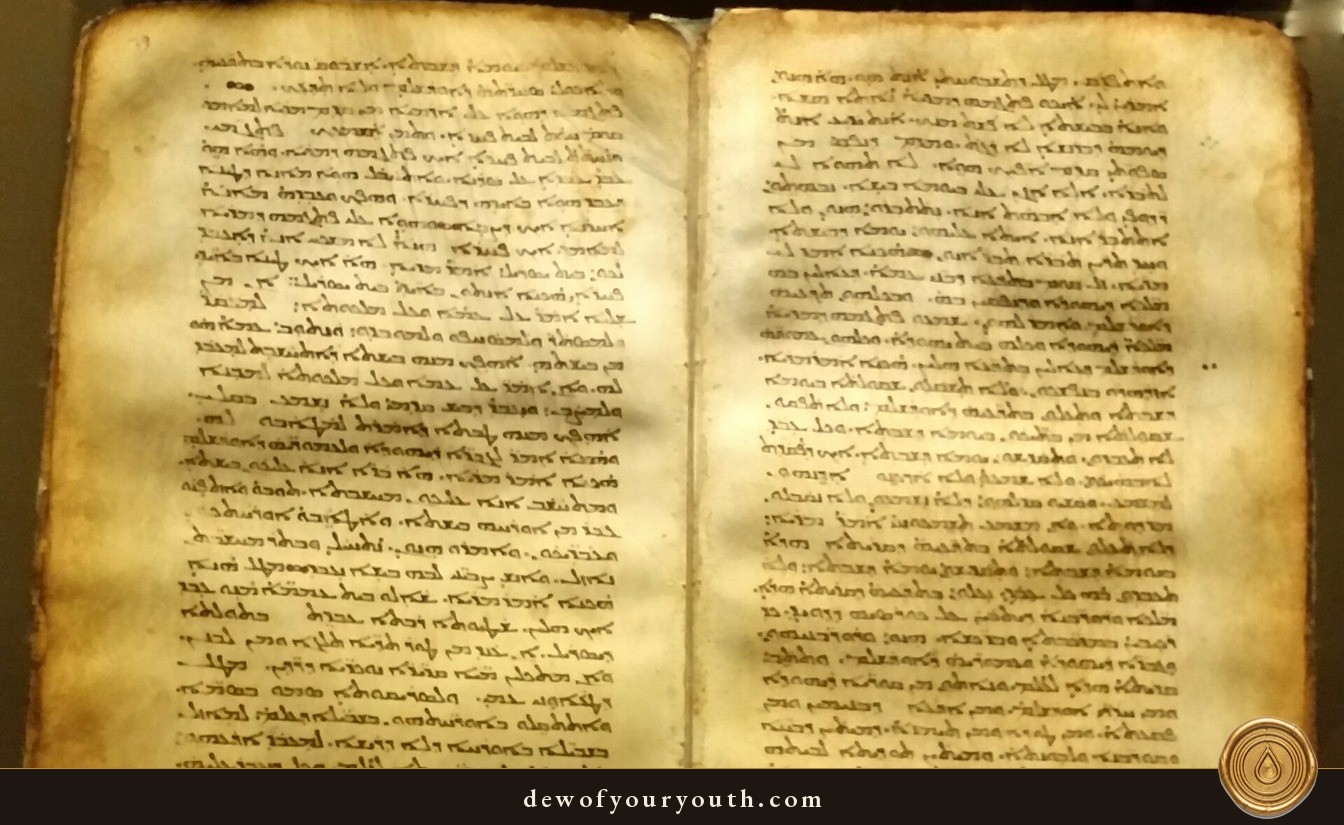
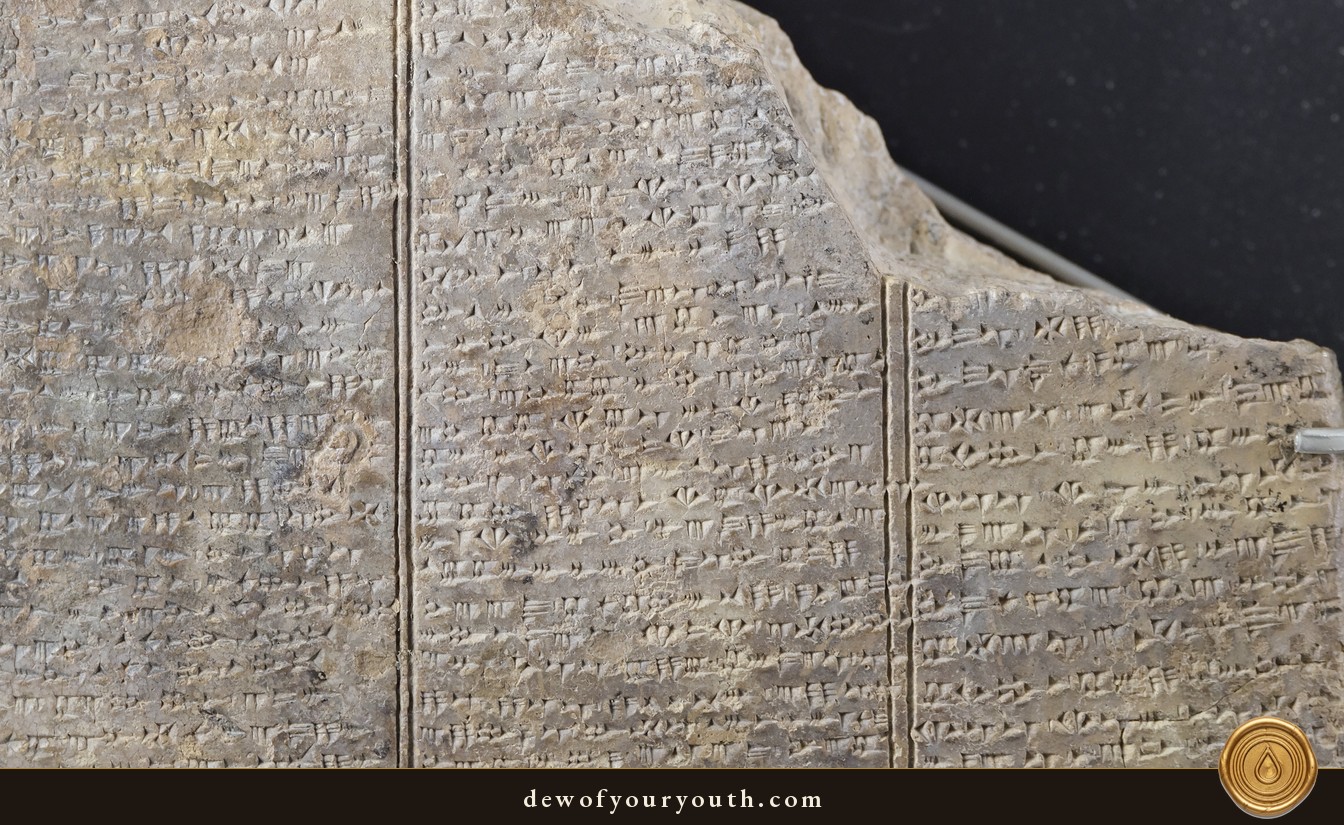
These are The earliest stage of Aramaic, written by the city-states of Syria from roughly the tenth to the eighth century BCE. texts. The Hebrew and Arabic columns below present the same Aramaic words in different letters; they are not translations. The Latin column also gives consonants, not a reconstructed pronunciation. The Arabic letters are an approximate reading aid, particularly for sounds such as p. Square brackets mark supplied letters in damaged portions.
The passages are divided into readable clauses rather than reproducing the stone’s line breaks. The text follows the Comprehensive Aramaic Lexicon’s editions, with word spacing and restorations for this presentation. In Zakkur, the damaged speaking verb is conventionally restored here as וידבר; the reading is not fully preserved on the stone.
Zakkur: a king under siege
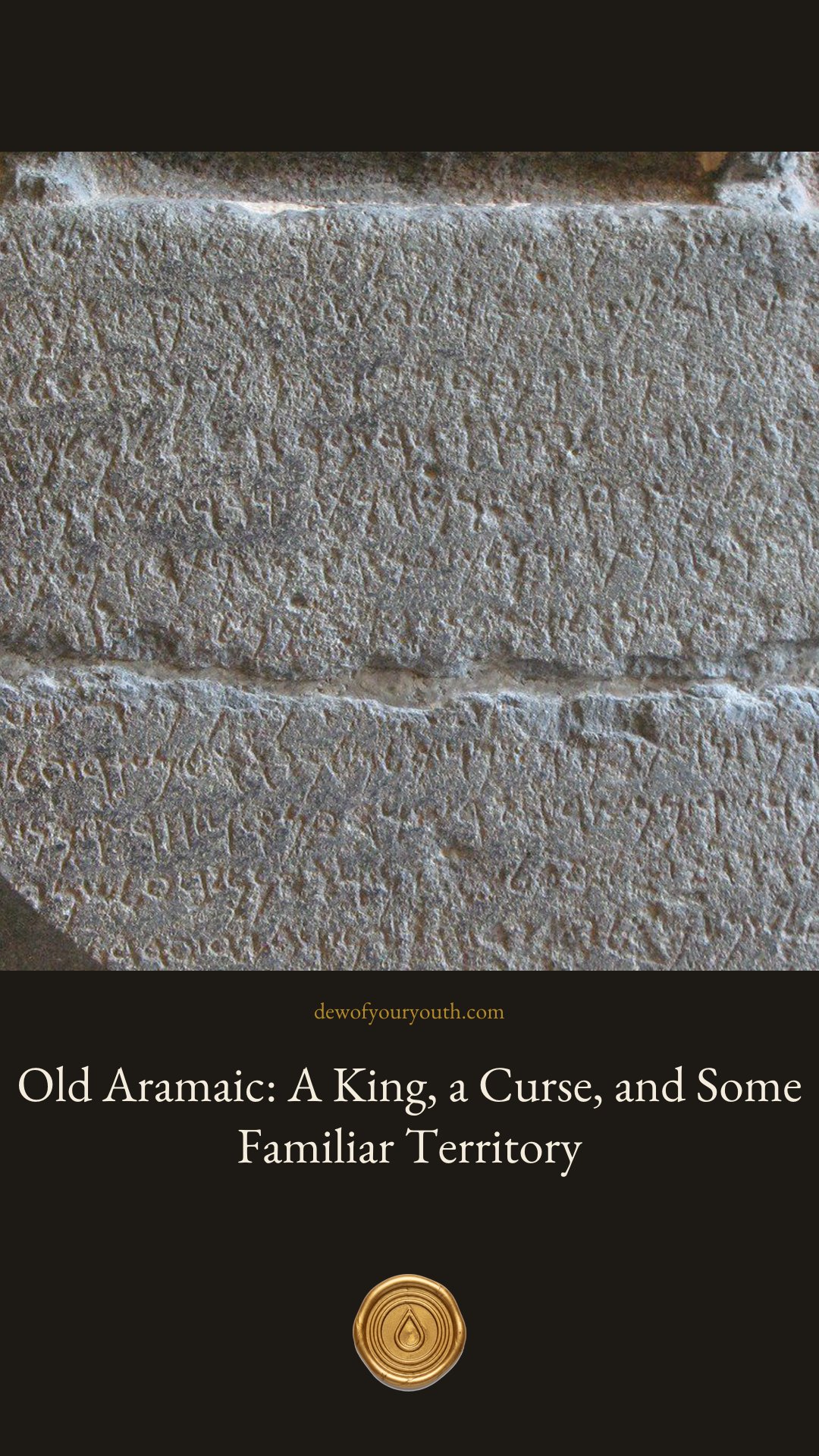
The Zakkur stele, Kanaanäische und aramäische Inschriften: the standard numbered collection of Canaanite and Aramaic inscriptions. 202, records a king’s account of a siege and divine assistance. Here is the passage I attempted, from face A, lines 9–15.1
| Aramaic in Hebrew letters | Arabic letters | Latin letters | Meaning |
|---|---|---|---|
| ושמו כל מלכיא אל מצר על חזר[ך] | وشمو كل ملكيا ال مصر عل حزر[ك] | wšmw kl mlkyʾ ʾl mṣr ʿl ḥzr[k] | All these kings laid siege to Hazrak. |
| והרמו שר מן שר חזרך והעמקו חרץ מן חר[צה] | وهرمو شر من شر حزرك وهعمقو حرص من حر[صه] | whrmw šr mn šr ḥzrk whʿmqw ḥrṣ mn ḥr[ṣh] | They raised a rampart higher than Hazrak’s rampart and dug a ditch deeper than its ditch. |
| ואשא ידי אל בעלש[מי]ן ויענני בעלשמי[ן] | واشا يدي ال بعلش[مي]ن ويعنني بعلشمي[ن] | wʾšʾ ydy ʾl bʿlš[my]n wyʿnny bʿlšmy[n] | I lifted my hands to Baalshamayin, and Baalshamayin answered me. |
| [וידבר] בעלשמין אלי [ב]יד חזין וביד עדדן | [ويدبر] بعلشمين الي [ب]يد حزين وبيد عددن | [wydbr] bʿlšmyn ʾly [b]yd ḥzyn wbyd ʿddn | Baalshamayin spoke to me through seers and diviners. |
| [ויאמר אלי] בעלשמין אל תזחל כי אנה המל[כתך] | [ويامر الي] بعلشمين ال تزحل كي انه همل[كتك] | [wyʾmr ʾly] bʿlšmyn ʾl tzḥl ky ʾnh hml[ktk] | Baalshamayin said to me: Do not fear, for I made you king. |
| ואנה [אק]ם עמך | وانه [اق]م عمك | wʾnh [ʾq]m ʿmk | And I will stand with you. |
| ואנה אחצלך מן כל [מלכיא אל זי] מחאו עליך מצר | وانه احصلك من كل [ملكيا ال زي] محاو عليك مصر | wʾnh ʾḥṣlk mn kl [mlkyʾ ʾl zy] mḥʾw ʿlyk mṣr | And I will rescue you from all these kings who have laid siege to you. |
I could follow most of the story. Kings put a siege on Hatarikka, biblical Hadrach (Zechariah 9:1): the northern Syrian city where Zakkur was besieged., something happens with fortifications and ditches, and the king raises his hands to “Lord of Heaven”: a West Semitic sky god, Zakkur’s patron.. An answer comes through religious intermediaries: don’t fear; I made you king, and I will save you.
The siege works were harder. I got the digging of ditches, but missed שר, translated as “rampart.” To be completely honest, I wasn’t sure what a rampart was in English either. I knew it was in the American national anthem. That didn’t help much.
חזין suggested Hebrew for a seer or visionary; in older biblical usage, a prophet., a seer. עדדן was unfamiliar, but I guessed from its position that it meant another sort of religious intermediary. The checked translation gives “diviners.” That was a contextual guess, rather than a word I knew.
I also read ואנה אקם עמך as something like “I will establish you.” The meaning is “I will stand with you.” I understood the reassurance, but changed who was doing the standing.
Sefire: seven nurses, one unsatisfied baby
The second passage comes from Sefire I, KAI 222, face A, lines 21–24. It is part of a treaty curse.2
| Aramaic in Hebrew letters | Arabic letters | Latin letters | Meaning |
|---|---|---|---|
| ושבע [מהי]נקן ימשח[ן] שדיהן [ו]יהינקן עלים ואל ישבע | وشبع [مهي]نقن يمشح[ن] شديهن [و]يهينقن عليم وال يشبع | wšbʿ [mhy]nqn ymšḥ[n] šdyhn [w]yhynqn ʿlym wʾl yšbʿ | May seven nurses smear their breasts and nurse a boy, but may he not be satisfied. |
| ושבע ססיה יהינקן על ואל יש[בע] | وشبع سسيه يهينقن عل وال يش[بع] | wšbʿ ssyh yhynqn ʿl wʾl yš[bʿ] | May seven mares nurse a foal, but may it not be satisfied. |
| ושבע שורה יהינקן עגל ואל ישבע | وشبع شوره يهينقن عجل وال يشبع | wšbʿ šwrh yhynqn ʿgl wʾl yšbʿ | May seven cows nurse a calf, but may it not be satisfied. |
| ושבע שאן יהינקן אמר ו[אל יש]בע | وشبع شان يهينقن امر و[ال يش]بع | wšbʿ šʾn yhynqn ʾmr w[ʾl yš]bʿ | May seven ewes nurse a lamb, but may it not be satisfied. |
Seven nurses, one boy, and he still isn’t satisfied. Then the same thing happens with mares and a foal, cows and a calf, and ewes and a lamb. Once I had the pattern, much of the passage fell into place.
על, the word for a foal, was entirely a guess from the mares nursing it. עגל, a calf, was familiar. So was אמר, a lamb: I already knew Immera: Aramaic for a lamb. as a lamb from Aramaic.
With שורה, cows, Hebrew was the better hint. It’s close to Hebrew שור, an ox, while the The Mishnah with the Gemara’s discussion of it: the central text of rabbinic law and thought, mostly in Aramaic. Aramaic I’m used to would have תור or תורא. Here the older Aramaic looked more like Hebrew than like the The rabbis’ extended discussion of the Mishnah; together the two make up the Talmud..
I was less sure what to make of the nurses smearing their breasts. I could recognize the words without understanding the practice. I was curious, but not that curious. (I did not Google it; it seemed like asking for trouble.)
One small irritation when checking the working translation: the same repeated expression was rendered sometimes as remaining “hungry” and sometimes as “unsatisfied.” Those are close, but the Aramaic keeps repeating ואל ישבע. I’ve kept that repetition in the table.
Familiar words, familiar curses
The themes were helping me as much as some of the vocabulary. In Leviticus 26:26, ten women bake bread in one oven, and people eat without being satisfied:
ואכלתם ולא תשבעו
You will eat and not be satisfied.
The same chapter repeatedly invokes sevenfold punishment: verses 18, 21, 24, and 28. Pharaoh’s dream in Genesis 41 also came to mind: the lean cows consume the fat cows without looking any better for it. These aren’t identical passages, but they made the imagery feel familiar.
That gives this experiment an artificially easy starting point. I have Hebrew, years of Talmudic Aramaic, familiar letters, and familiar literary patterns working together. Sometimes I recognize a word; sometimes I already have a good idea of what this sort of sentence is likely to say.
The reading went well.
We’re off to a good start. I don’t anticipate that it will stay this easy.
Cover: the inscribed face of the Zakkur stele (KAI 202), Louvre AO 8185. Photo by Rama, CC BY-SA 2.0 FR, cropped.
Comprehensive Aramaic Lexicon, Zakkur / KAI 202, face A, lines 9–15. The English column is a working translation for this post. ↩︎
Comprehensive Aramaic Lexicon, Sefire I / KAI 222, face A, lines 21b–24a. The table covers the nursing curses, stopping before the following bread curse. ↩︎