Christian Urmi by Ear: Three Sons and a Mystery Fruit
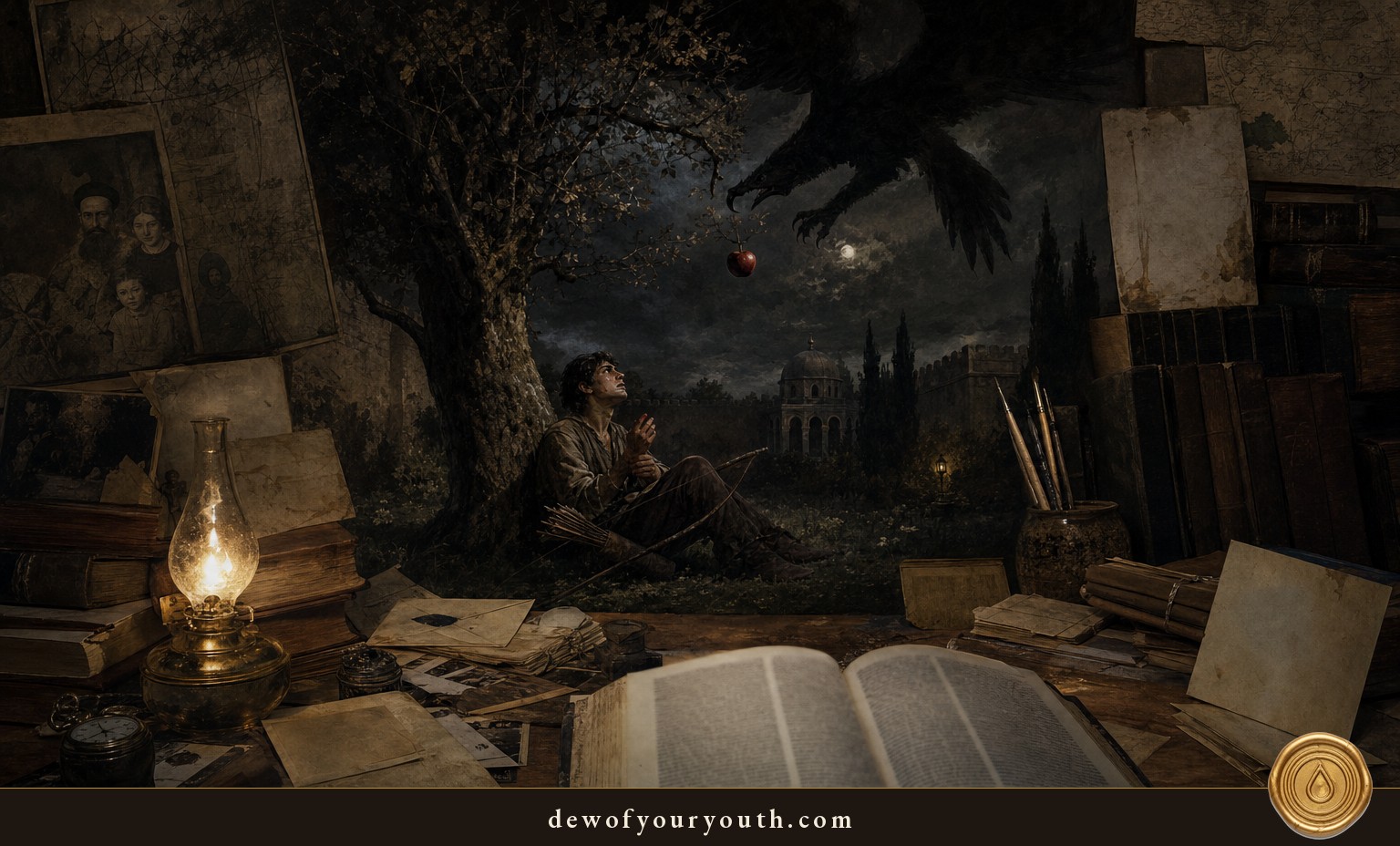
I’ve been going through various Semitic languages in this series. So far we’ve done Moabite, Phoenician, Sabaic and Ugaritic, and then we went on a bit of a detour into Aramaic, because Aramaic is huge. It was the lingua franca of the whole Middle East for a very long time, and there are lots of different eras of it. We’ve seen Old Aramaic, Imperial Aramaic, Nabataean, the Jewish and Christian Aramaic of Israel, Syriac and Mandaic.
It’s been a journey. My years of studying the The Babylonian Talmud, compiled in the academies of Babylonia (c. 500 CE): the Talmud usually studied. and The Jerusalem Talmud, compiled in the Land of Israel (c. 400 CE) in a western Aramaic dialect., the An Aramaic translation of the Bible, such as Targum Onkelos on the Torah (pl. targumim). and other things written in Aramaic let me recognize quite a bit of it, more than I could with Punic, and much more than Ugaritic. So now we’re starting on The Aramaic languages still spoken today by Jewish, Christian and Mandaean communities, mostly from Iraq, Iran, Turkey and Syria., to see how much of that carries over.
Christian Urmi
We’re starting with the Aramaic of the Urmia region. Urmia is in northwestern Iran. Turkey, Armenia and Azerbaijan are all around it, and the province is called West Azerbaijan. If you zoom in on the map you’ll find Lake Urmia, which is a very famous lake, and then the area around it.
There are actually two varieties, a Christian Urmia, a city in northwestern Iran near Lake Urmia, home to Christian and Jewish Neo-Aramaic-speaking communities. and a Jewish Urmi, and both were documented in the fieldwork of Professor Geoffrey Khan, a scholar of Semitic languages and biblical Hebrew at Cambridge. Today’s is Christian Urmi. There was a large, long-standing Christian community in Urmia, associated with the The ancient Syriac church of Mesopotamia and Persia, whose heirs include today’s Assyrian Church of the East., with Catholic and Protestant communities in the region too. In the nineteenth century Urmia became an important center for schools, printing, newspapers and modern Aramaic literature. The First World War brought massacres and catastrophic displacement, and many people fled.
I got this from listening to interviews with Professor Khan: the Christians and the Jews there both considered their Aramaic a very important part of their heritage. They lived as minorities in a very Muslim country, and the Neo-Aramaic they spoke was very much a part of their identity. Nowadays it’s very endangered. Assyrian communities remain in Urmia and in Tehran, and there’s a large diaspora in California, Chicago, Australia and Europe. I can’t go to Iran, so I don’t know for sure. I would love to find out, but my understanding is that there’s maybe a shell of what used to be.
Professor Khan published four volumes on Christian Urmi, covering its grammar, its vocabulary and stories. I didn’t want to read them beforehand, because I didn’t want to taint the experiment. The recordings come from the Cambridge The North-Eastern Neo-Aramaic Database Project at Cambridge, directed by Geoffrey Khan: recordings, transcriptions and grammars of the spoken dialects. project, the North-Eastern Neo-Aramaic Database Project, which he directs, with contributions from other researchers.
These recordings exist because speakers shared their language and their stories, and because researchers put an enormous amount of work into documenting them. So we really need to thank Professor Khan and his team. Without that work we’d know almost nothing about these dialects. He also gave me permission to use the material here.
Today’s speaker is Yonan Petrus, and the story is “The Adventures of Ashur,” recorded in Fresno, California, and transcribed by Professor Khan.
How I did it
Here were the rules. The first time through is audio only, no text and no translation; I pause and say what I recognize. Then I listen again with a text. My Aramaic is mostly from books. There are some songs we sing in Aramaic, but mostly I’ve read it, so I figured seeing the words might help.
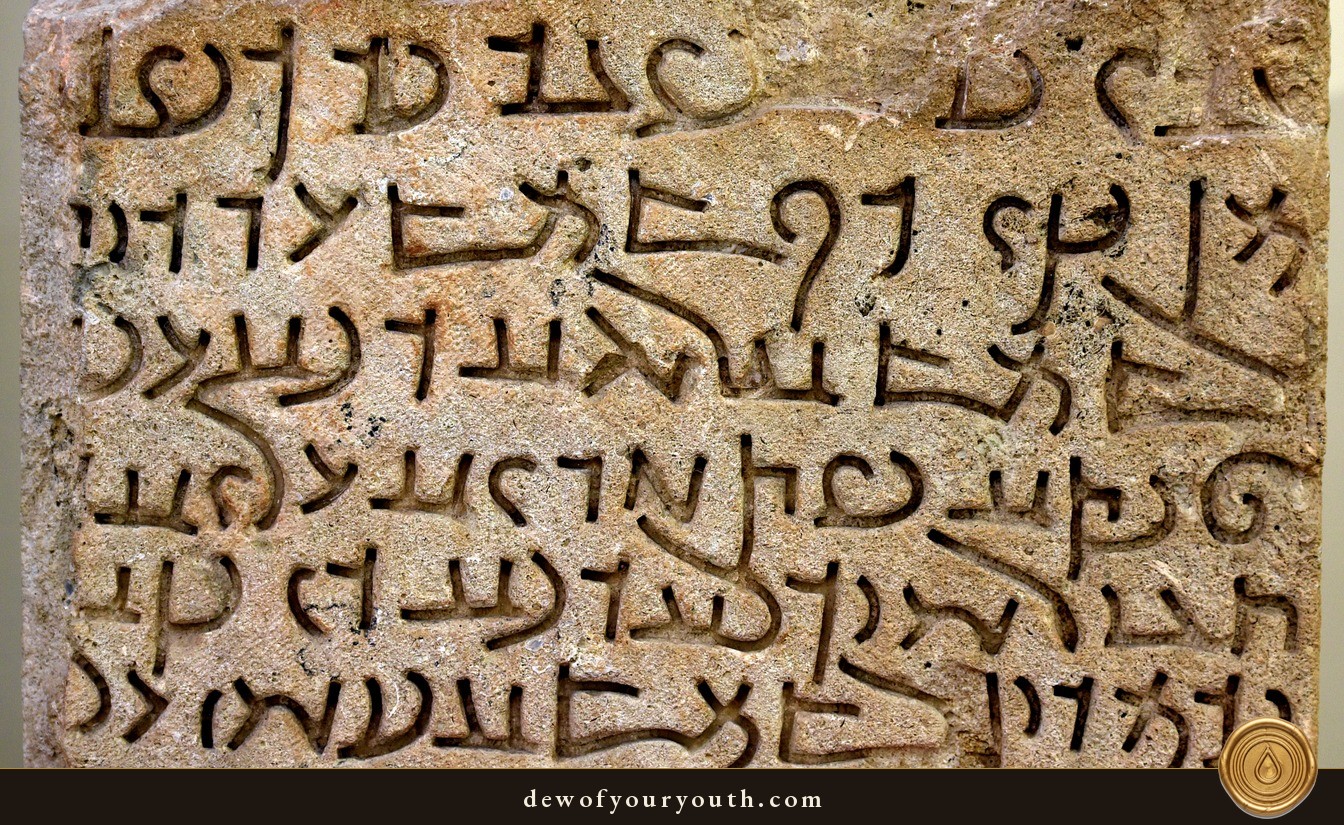
I was originally going to just write out the sounds. Then I found out that a Christian from Urmia spells things differently from how they say them, in The eastern form of the Syriac alphabet, used by the Church of the East and for Christian Neo-Aramaic. letters, with spelling that was made to look like Classical The Aramaic dialect of Edessa, and the literary and liturgical language of Syriac Christianity.. So I had ChatGPT help me put together a version in four columns: Syriac letters, the same spelling in Hebrew letters, the pronunciation in Hebrew letters, and Khan’s Latin. It’s 345 rows. Of roughly 3,300 words, 141 have a spelling we could check in a dictionary, about 1,400 are proposals, and around 1,700 we couldn’t work out, so those are in ⟦double brackets⟧ and just follow the sound.
The tables below take a few rows from it, with Khan’s transcription of what Yonan Petrus says and the meaning from Khan’s translation.
The king and his sons
Here is how the story begins, in Yonan Petrus’s own voice:
Recording: Yonan Petrus, “The Adventures of Ashur,” NENA Database Project, University of Cambridge. Used with permission. You can hear the whole story on the NENA site, along with Khan’s transcription and translation.
| Syriac (tentative) | Hebrew letters | As spoken | Meaning |
|---|---|---|---|
| ܐܝܬ ܗܘܐ ܠܝܬ ܗܘܐ … ܐܝܬ ܗܘܐ ܚܕ-ܡܠܟܐ | אית הוא לית הוא … אית הוא חד-מלכא | ʾə́tva lə̀tva … ʾə́tva xa-màlca | There was, there was not, there was a king. |
| ܐܗܐ ܡܠܟܐ ܐܝܬ ܗܘܐ ܠܗ ܬܠܬܐ ܒܢܘܢܐ | אהא מלכא אית הוא לה תלתא בנונא | ʾáha málca ʾə́tvalə ⁺ṱlá bnùnə | This king had three sons. |
| ܫܡܬ ܕܗܘ-ܒܪܘܢܗ ܙܥܘܪܐ ⟦ܐܝܒܐ⟧ ܐܫܘܪ | שמת דהו-ברונה זעורא ⟦איבא⟧ אשור | šə́mmət do-brúnu súra ʾíva ⁺ʾÀšur | The name of the youngest son was Ashur. |
The story opens with a formula. By ear I recognized ʾətva as “there was,” and xa-malca as “a king,” with xa being חד, one. With the text in front of me I could see the whole formula: אית הוא, לית הוא, “there was, there was not.” Persian folktales open the same way, with yeki bud, yeki nabud, and so do Turkish ones, with bir varmış, bir yokmuş.
The three sons came through on the first listen. Ṭla is תלתא, and bnunə is sons, close to Hebrew בנים and the Gemara’s בנין. I also heard that the name of one son was Ashur. The word for “youngest,” sura, I didn’t know. I connected it with Arabic ṣaghīr, small, which was a guess. In the text the word is spelled זעורא, and that I did recognize: it’s זעירא, small.
The garden and the tree
| Syriac (tentative) | Hebrew letters | As spoken | Meaning |
|---|---|---|---|
| ܐܝܬ ܗܘܐ ܠܗ ܚܕ-⟦ܒܚܟܐ⟧ ܪܒܐ ܫܦܝܪܬܐ | אית הוא לה חד-⟦בחכא⟧ רבא שפירתא | ʾə́tvalə xa-báxca ⁺ràba šap̂ə́rta | He had a very beautiful garden. |
| ⟦ܓܒܘ⟧ ܐܝܬ ܗܘܐ ܠܗ ܚܕ-ܐܝܠܢܬ ܚܒܘܫܐ | ⟦גבו⟧ אית הוא לה חד-אילנת חבושא | ɟávo ʾə́tvalə xa-ʾilánət xabùšə | In it there was an apple tree. |
| ܫܢܬܐ ܚܕ-ܕܢܐ ܚܒܘܫܐ ܟܝ-⟦ܛܢܒܐ⟧ | שנתא חד-דנא חבושא כי-⟦טנבא⟧ | šíta xà-dana xabúša ci-ṱā́nva | It bore one single apple a year. |
Most of this I understood by ear. Šap̂ərta is שפירתא, nice or beautiful, and raba is רבא. I took it as “big,” and here it means “very”: a very beautiful garden. Gavo is גו, inside, so “in it.” Xa-ʾilanət is “one tree,” with ʾilan as אילן. Šita xa-dana I heard as one year, with šita as שתא.
What I didn’t know was baxca, the garden itself. On the first listen all I said was that “the king has also a nice khabakh jaroba. Whatever that is.” I thought it might be an orchard, and with the text I read it as a field, by way of חקלא. It is the Persian word for a garden, which Turkish also has as bahçe.
The other word I didn’t know was xabuša. I knew it had to be whatever grew on the tree. It turned out to be an apple. In Hebrew, חבוש is a quince, so it was closer to home than I realized.
What the apple does
| Syriac (tentative) | Hebrew letters | As spoken | Meaning |
|---|---|---|---|
| ܗܐ-ܡܠܟܐ ⟦ܣܒܠܐ⟧ | הא-מלכא ⟦סבלא⟧ | ʾa-màlca sə̀vlə | The king became old. |
The next lines explain why the tree matters. Whoever eats the apple, if he is old, becomes young again and goes back to the life of his youth. I caught that the sentence was about eating the fruit. On the first listen I heard xayyutə and said “life or death? Maybe?” Life was right, but ʾulaymuta was not death, even though it ends in -muta. It is youth, the same root as עולימא.
With the text I read xayyutə as חיות, wild animals, instead of life. That left me with a story in which wild animals were eating the fallen fruit. An animal does eat the apple, a few lines later, so the story wasn’t far off, but this sentence says something else.
Then the king grows old: səvlə. I heard it first as suffering, from סבל, and then as being upset. It comes from סבא, an old man. That was the piece I needed. The king is old and the apple makes the old young, which is why he wants it guarded. I didn’t put that together on either attempt.
The sons on guard
| Syriac (tentative) | Hebrew letters | As spoken | Meaning |
|---|---|---|---|
| ܒܪܘܢܝ، ܚܘܫ، ܗܘ ܚܒܘܫܐ ⟦ܢܛܘܪܪܐ⟧ | ברוני, חוש, הו חבושא ⟦נטוררא⟧ | brùni, xùš, ʾó xabúša ⁺nṱùrrə | My son, go and guard that apple. |
| ܕܢܬ ⟦ܡܛܬܬ⟧ ܚܒܘܫܐ، ⟦ܡܘܬܬܝܠܐ⟧ ܪܝܫܗ ⟦ܛܠܝܠܐ⟧ | דנת ⟦מטתת⟧ חבושא, ⟦מותתילא⟧ רישה ⟦טלילא⟧ | ⁺dánət ⁺mṱétət xabùša, muttílə ríšu ⁺ṱlìlə | When the apple ripened, he lay down his head and slept. |
| ܚܒܘܫܐ ⟦ܚܠܠܐ⟧، ⟦ܚܫܠܐ⟧ | חבושא ⟦חללא⟧, ⟦חשלא⟧ | xabúša ⁺xə̀llə, xə̀šlə | It ate the apple and went away. |
The king sends his eldest son: “My son, go and guard that apple.” Bruni is “my son,” from בר. With the text I understood nṭurrə as נטר, to guard. I also heard b-lelə, at night, and rišu, his head, from רישא.
The animal is ʾo-heyvan, from Arabic ḥayawān by way of Persian or Turkish. It comes at night, eats the apple and goes, and the eldest son sleeps through it. The verb for the animal going is xəšlə. I heard it as Hebrew כשל, to fail, and because the son was failing it seemed to fit. It means “went.”
The next year the king sends brunu d-trə, his second son. I understood that on both attempts, along with the year passing. The second son also falls asleep. So I had the structure right: two sons, two years, two failures. What I didn’t have was how they failed.
Ashur’s turn
| Syriac (tentative) | Hebrew letters | As spoken | Meaning |
|---|---|---|---|
| ⟦ܡܪܪܐ⟧ ܒܐܒܝ ⟦ܫܘܩ⟧ ⟦ܐܙܢ⟧ ܐܢܐ-ܕܐ ⟦ܚܝܢܐ⟧ | ⟦מררא⟧ באבי ⟦שוק⟧ ⟦אזנ⟧ אנא-דא ⟦חינא⟧ | mə́rrə bàbi šúk̭ ʾázən ʾàna꞊da xína | He said, “Father, let me also go.” |
| ⟦ܓܝܪܐ⟧ ⟦ܩܫܬܐ⟧ ܐܝܬ ܗܘܐ ܠܗ | ⟦גירא⟧ ⟦קשתא⟧ אית הוא לה | ɟíra k̭ə̀šta ʾə́tvalə | He had a bow and arrow. |
| ܡܠܚܐ ⟦ܕܪܝܠܐ⟧ ܥܠܗ | מלחא ⟦דרילא⟧ עלה | mə̀lxa drílə ⁺ʾàllo | He put salt on it. |
In the third year Ashur, the youngest, tells his father, babi, that he wants to go. His father asks what he expects to do that his older brothers couldn’t. By ear I understood that Ashur was speaking to his father and insisting that he could handle it. My version on the blind listen was: “Dad, don’t worry, man. I got this khabushi tree down. Leave it in my hands.” I said I had full faith in Ashur’s ability to do that. With the text I also understood mərrə, he said, from אמר.
Ashur’s answer is šuk ʾazən ʾana-da, “let me go too.” I read ʾazən as אוזן, ear, and came up with “give me your ear.” It is אזל, to go, a word on practically every page of the Gemara, with the l gone in speech. Šuk is שבק, to let. The same root appears a few lines earlier, where the animal lé-šavək̭va, wouldn’t let the apple remain. I know both of these words well in writing. Spoken, I didn’t recognize either one.
Ashur has a bow and arrow, ɟira and k̭əšta. Those are גירא and קשת, and I missed them both. When he starts to feel sleepy, he cuts his finger and puts salt on it, and the sting keeps him awake. I heard məlxa, מלחא, and understood that he was using salt. I assumed he was salting the fruit.
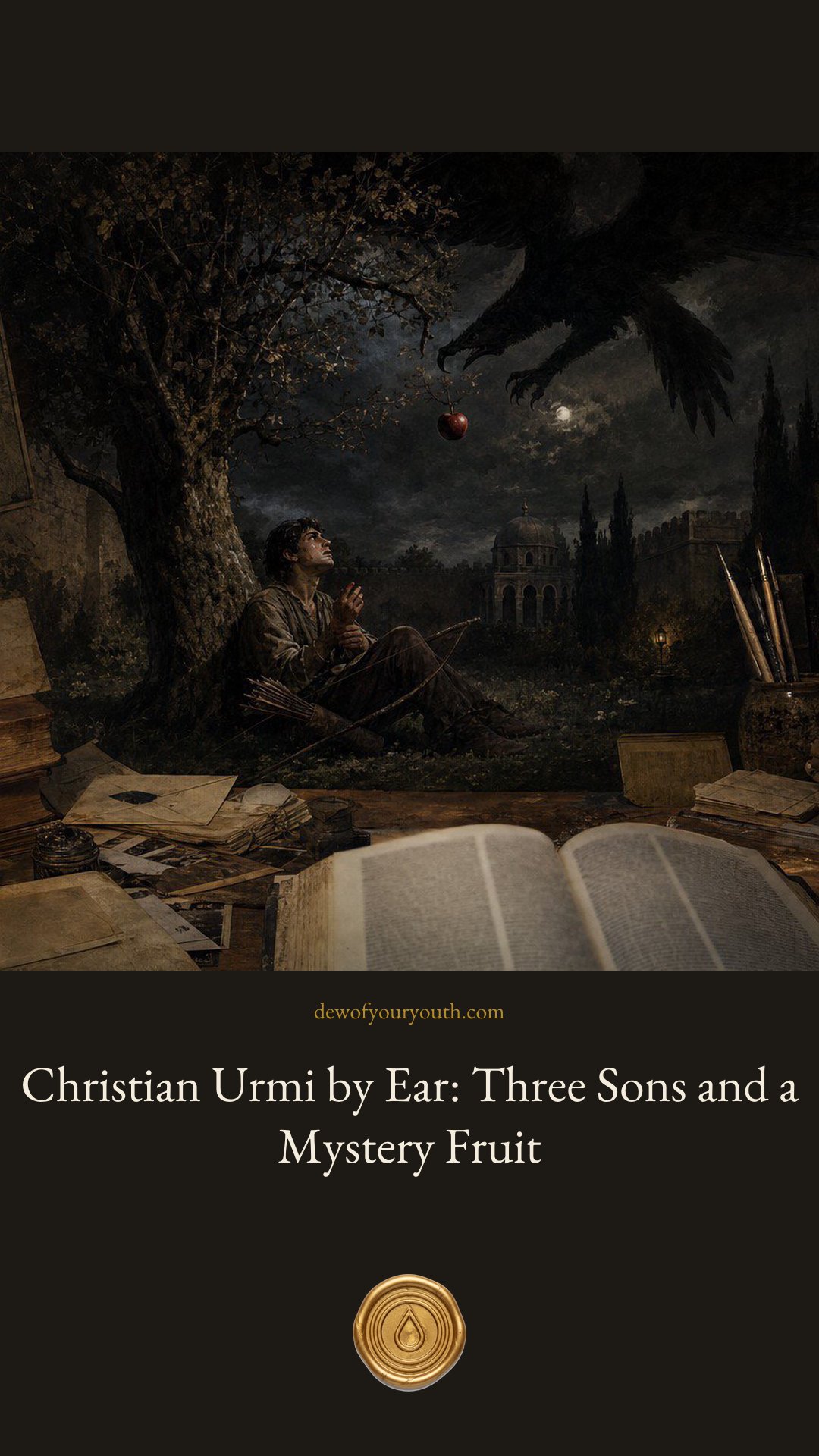
At midnight a huge black animal comes for the apple and Ashur shoots it. It gets away bleeding, and in the morning he brings the apple home to his father. Both of my attempts stopped about here.
The rest of the story
The story keeps going for a long time. The brothers follow the blood to a well. The two older ones are lowered in and shout “I’m burning, I’m cooking!” until they are pulled out. Ashur goes all the way down, kills three monsters, and frees three sisters. His brothers pull the women up and cut the rope.
Down below, Ashur kills a dragon that has been blocking a village’s river, and saves the chicks of a giant bird, the simaxur, from a snake. The bird carries him back up in seven stages, and the whole way up he feeds it roast sheep, bread and wine. After that there is a sister who has eaten an entire town, a blind giant whose eyes Ashur gets back from a demon, and a wedding of seven days and seven nights.
The simaxur seems to be the A giant benevolent bird of Persian legend, best known from the Shahnameh. of Persian legend. At one point Yonan Petrus switches into Azerbaijani, the Turkic language of Azerbaijan and northwestern Iran, including the Urmia region., since that is how the formula is told: “They went a little, they went a long way, they went straight over vale and hill.” He also mentions that he used to tell these stories to his children. The full recording is on the NENA site, and it’s worth listening to all the way through.
How much carried over
By ear, the words I understood were xa, ṭla, bruni, ʾilan, raba, šap̂ərta, šita, rišu and məlxa. With the text I added nṭurrə and mərrə. Apart from məlxa, which is plain Hebrew מלח, every one of them is Gemara Aramaic: חד, תלתא, בר, אילן, רבא, שפירא, שתא, רישא, נטר, אמר.
The wrong turns were səvlə as סבל, xayyutə as חיות, xəšlə as כשל, and ʾazən as אוזן. Each time, a Hebrew word with roughly the right consonants got in ahead of the Aramaic one.
Then the ones I missed outright, though I read them constantly: ʾazən from אזל, šuk from שבק, sava from סבא, ɟira and k̭əšta from גירא and קשת. In the reconstruction every one of these ended up in double brackets, so the written version couldn’t help with them. It did help with word boundaries, with ʾətva lətva, and with זעורא.
When I planned this series I said I’d do the ancient languages first because that was more apples to apples. I didn’t expect the first modern one to be about an actual apple.
Credits and sources
- Recording, transcription and translation: “Urmi, Christian: The Adventures of Ashur,” told by Yonan Petrus, Fresno, California; transcribed and translated by Geoffrey Khan. North-Eastern Neo-Aramaic Database Project, University of Cambridge. Used with permission.
- Geoffrey Khan, The Neo-Aramaic Dialect of the Assyrian Christians of Urmi, 4 vols., Studies in Semitic Languages and Linguistics 86 (Leiden–Boston: Brill, 2016), vol. 4.
- The Syriac and Hebrew-letter spellings are my own tentative reconstruction, not an attested written text of the story.