Faith & Practice
Torah Doesn't Check Your Pedigree: Tzidkat HaTzaddik 77–78
Rav Tzadok on why Torah ignores pedigree but righteousness doesn’t, and how even a wicked child can do his father some good.

45 posts
Rav Tzadok on why Torah ignores pedigree but righteousness doesn’t, and how even a wicked child can do his father some good.
Rav Tzadok on why a Jew’s sins can be redeemed but his mitzvot cannot be sold, and why the moment you most want to sin may be the moment you can rise highest.
Rav Tzadok on Eliyahu’s miracles through Torah and Elisha’s through prayer, and why Hashem brings a penitent back to the scene of the sin.
Rav Tzadok claims a person’s deficiency is his greatness: the fig leaves, the red cow and the Golden Calf, Bruriah’s prayer, and Elisha’s bears.
Rav Tzadok on why mastering yourself makes no noise: Eliyahu’s still, small voice, and the king the blind Rav Sheshet knew by its silence.
Rav Tzadok says everything needs prayer, even what God has already decreed, and that every new level means repenting again for sins already forgiven.
Rav Tzadok says Hashem’s help doesn’t prove you’re right, then reads Rabbi Eliezer’s miracles and Korach’s 250 men through that idea.
Rav Tzadok says great people acquired qualities for their descendants, but not Torah. Then, one paragraph later, sons become Torah scholars through their mothers.
Head covering, six hours between meat and dairy, an ever-longer siddur: how the practices of the especially pious quietly become everyone’s minimum.
ה-ma של מיאזאקי, ‘שדה הריקות’ של נישיטאני וה״מה״ של משה מצביעים כולם על דבר אחד: המרחב הפנוי שבו אפשר לקבל.
Miyazaki’s ma, Nishitani’s field of emptiness, and Moshe’s mah all point to one thing: the open space where something can be received.
A jog up Tel Yarmut sparks a reflection on the tension between halachic categories and the lived reality of Jewish destiny.
How Kabbalah became woven into normative Judaism despite disputed origins, and why disciplined restraint beats revisionist erasure. Featured image by Roy Lindman, CC BY-SA 3.0, via Wikimedia Commons
A critique of Elon Gilad’s confident pop-Judaism: how narrow philological claims about sufganiyot, meat-and-milk, and Mishnah variants get inflated into sweeping takedowns while ignoring broader sources and transmission. The piece argues for proportion—respecting evidence, the weight of commentary, and oral tradition instead of cherry-picked “gotchas.”
For Nerds! Tracking Elul in Obsidian: Logs, Charts, and Scripts
A trip to Ashdod with my kids to celebrate the yahrzeit of the original Tolna Rebbe tz"l.
Hebrew notes critiquing R. Asher Weiss on shlichus in mitzvos from Yarchei Kallah 5784.
Review of the basic obligation for checking for hametz according to the Rif and Ran.
Questions For Testing Yourself on the Parsha w/ Rashi and the Ramban
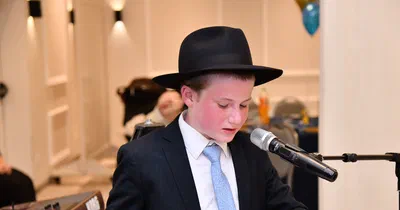
A speech I gave at my son’s bar mitzva. Originally delivered August 6th, 2023
My son’s bar mitzva speech, originally delivered by my son Eliyahu on August 6th, 2023
Memories of the Rosh Yeshiva זצ״ל, Part II
Memories of the Rosh Yeshiva זצ״ל, Part I
Rav Tzadok says the Nazir acts on a hidden wisdom meant for one person at one time. The angel who announced Samson’s birth would not give his name for the same reason.
The Ramban says the Torah means whatever the Sages rule. So why did Rabbi Akiva comfort Rabbi Yehoshua with a different verse when he had to break his Yom Kippur?
The Ramban says to eat what you’re sure is forbidden fat if the Sanhedrin permits it. How far he takes obedience to the Sages, in his own words.
Must a scholar follow the Sages into eating what he’s sure is forbidden? The Ohr HaChaim splits the difference: obey a command to act, but not a mere permission.
The Sifrei says to obey the Sages even if they call your right hand left. The Yerushalmi says only if right is right. The sources, side by side.
Is obeying the Sages still a mitzvah when you’re sure they’re wrong? A preface to a series on lo tasur, with the sources and the Chikrei Lev responsum behind it.
Asked whether a barbed verse from Joel went too far, Rav Yosef Trani ruled that a clever jab gets a pass, and told a story about a one-eyed rabbi to prove it.
A timeline of the Sefirah customs from the Talmud to the Tur, and Rabbi Chaim Vital’s account of the Arizal at Meron, which treats Lag BaOmer as an old custom, not a new one.
The Talmud tells of Rabbi Akiva’s students dying between Pesach and Shavuos but prescribes no mourning. The Geonim do, and only later does Lag BaOmer appear.
A viral claim says the Sefirah mourning and Lag BaOmer are a Roman custom picked up in the 1500s. Checking it against its own sources, and against a better-argued skeptic.
A court that permits what even the Sadducees know is forbidden owes no offering. But who should have known better: the judges, or the people who obeyed?
The Beit Yosef dismisses the Aviasaf for lacking a source; the Maadanei Yom Tov says he missed Niddah 65. And a seasonal onah is hard to live with.
A baraita in Niddah 65 says an onah is a day or a night at the equinoxes, but half of each at the solstices. The Aviasaf takes it at its word.
Halachic days run from dawn to nightfall, yet a woman’s expected period is reckoned from sunrise to sunset. The Aviasaf’s twelve-equal-hours onah begins to explain why.
Other categories: Learning & Languages, Heritage & Identity and Tech & Tools.