ה-ma של מיאזאקי, ‘שדה הריקות’ של נישיטאני וה״מה״ של משה מצביעים כולם על דבר אחד: המרחב הפנוי שבו אפשר לקבל.
Miyazaki’s ma, Nishitani’s field of emptiness, and Moshe’s mah all point to one thing: the open space where something can be received.
Embeddings taught my Elixir cheese catalog that cabernet means red wine, but a search for salty proved similarity isn’t the same as a good pairing.
I built a cheese catalog in Elixir, letting an LLM fill in flavor profiles and pairings — then used pattern matching to keep the data honest.
A voice note got misread as a literal agenda item called ‘whatever I missed.’ The fix turned into a general system for catching ambiguous commands, logging corrections, and a plan to move routine parsing off the API and onto a local model.
Twenty Arabic songs across Tunisian, Algerian, Levantine, and Sudanese dialects — liner notes for training your ear, song by song.
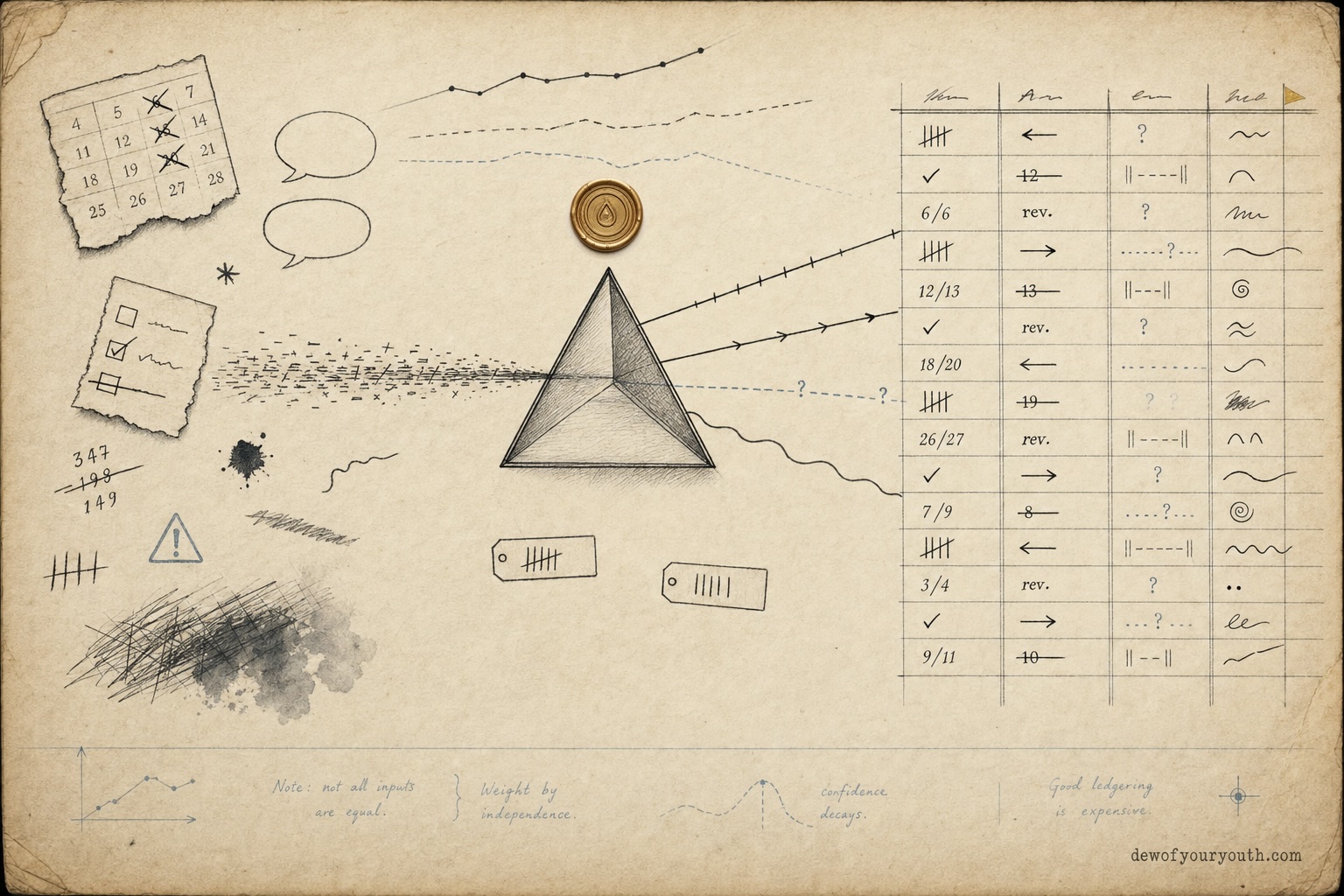
My personal-ops bot’s weekly digest kept turning noisy logs into confident diagnoses. The fix was one rule: count first, interpret second, diagnose cautiously.
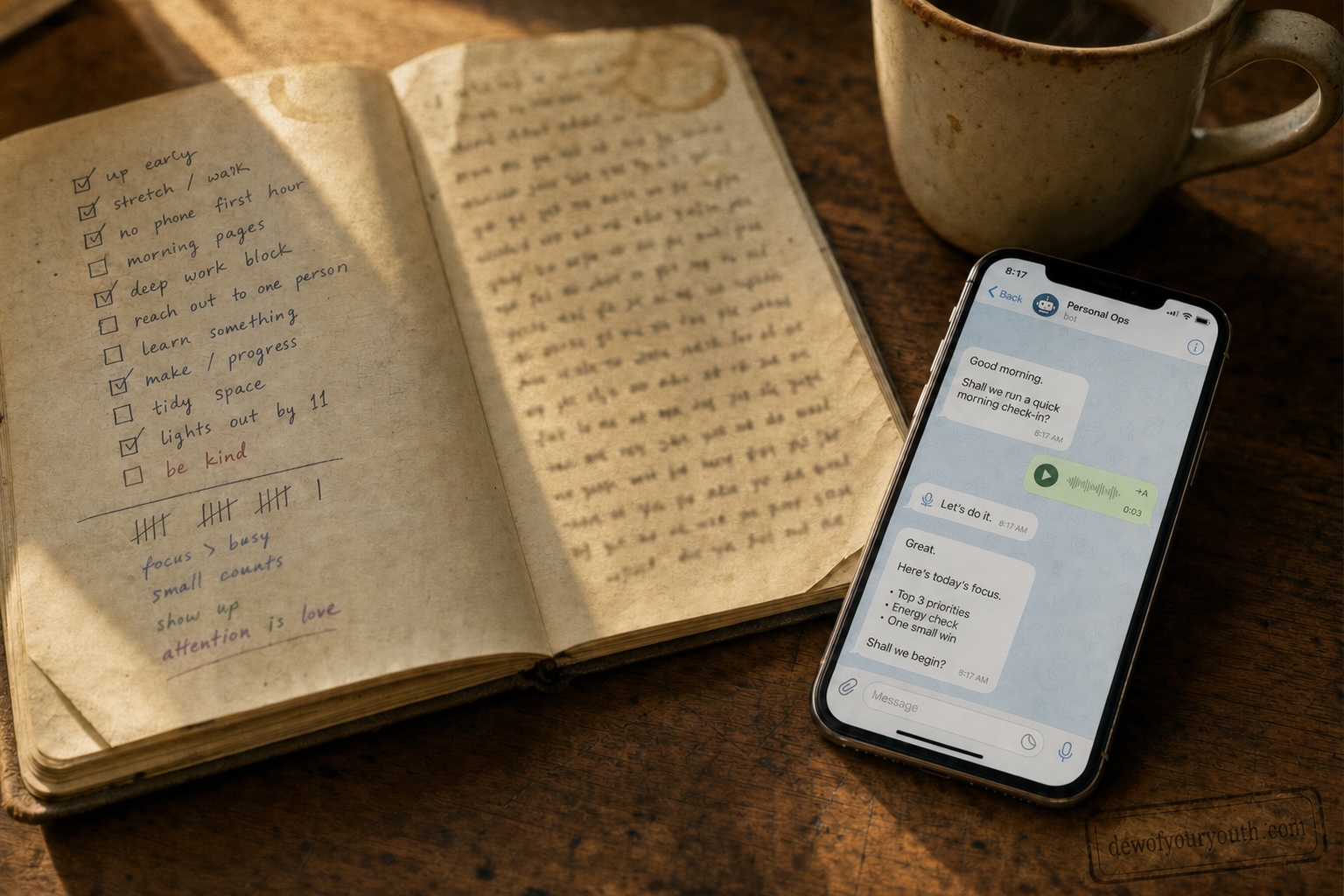
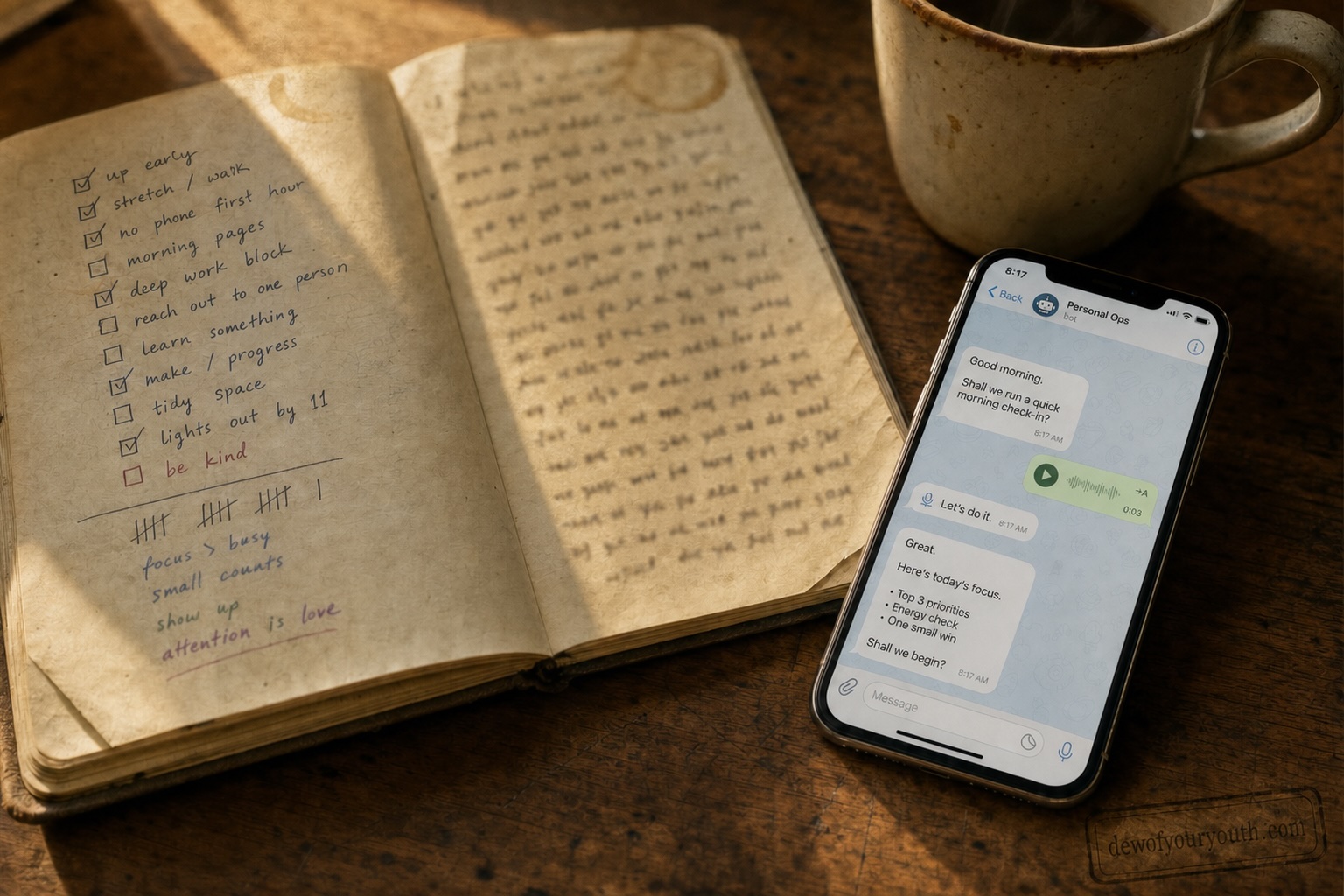
I built a Telegram bot to offload my executive function and accidentally gave myself a taskmaster. So I rebuilt it around one rule from the Talmud and the Daode Jing: be a reed, not a cedar — firm but yielding, advisory not prescriptive.
Completion rate is a trap. The moment your productivity system scores you on what percentage of commitments you finish, the rational move is to stop writing down anything you might actually fail at. I ran into this building my own personal ops system, and it turns out fixing it means thinking about Item Response Theory, Glicko ratings, and the Sharpe ratio.
Two years ago my Elul accountability experiment half-worked. The problem was friction, not motivation — and I had no mechanism to adjust expectations based on actual performance. So I built one: voice capture via Telegram, weekly LLM digest, and a daily agenda calibrated to what I’ve actually been completing versus missing.